Tag: Encouraging

  • Podcast Episode: Everyday Faith In Action

    Podcast Episode: Everyday Faith In Action

    Pip: Get Encouraged lives up to its name this week — Chris Miller has been quietly asking the kind of questions that sound simple until you actually sit with them.

    Mara: The posts cover three territories: trusting God with what you already have, the underestimated power of showing up and encouraging others, and what it actually looks like to find contentment.

    Pip: Let's start with what's already in your hands.

    God Uses What You Have

    Mara: The setup in 2 Kings 4 is stark — a widow with creditors at the door and almost nothing left. Elisha's question cuts right to it: "What do you have?"

    Pip: And her answer, as the post "What Do You Have in Your Hands" records it, is the whole point. She says, "Nothing at all, except a flask of olive oil."

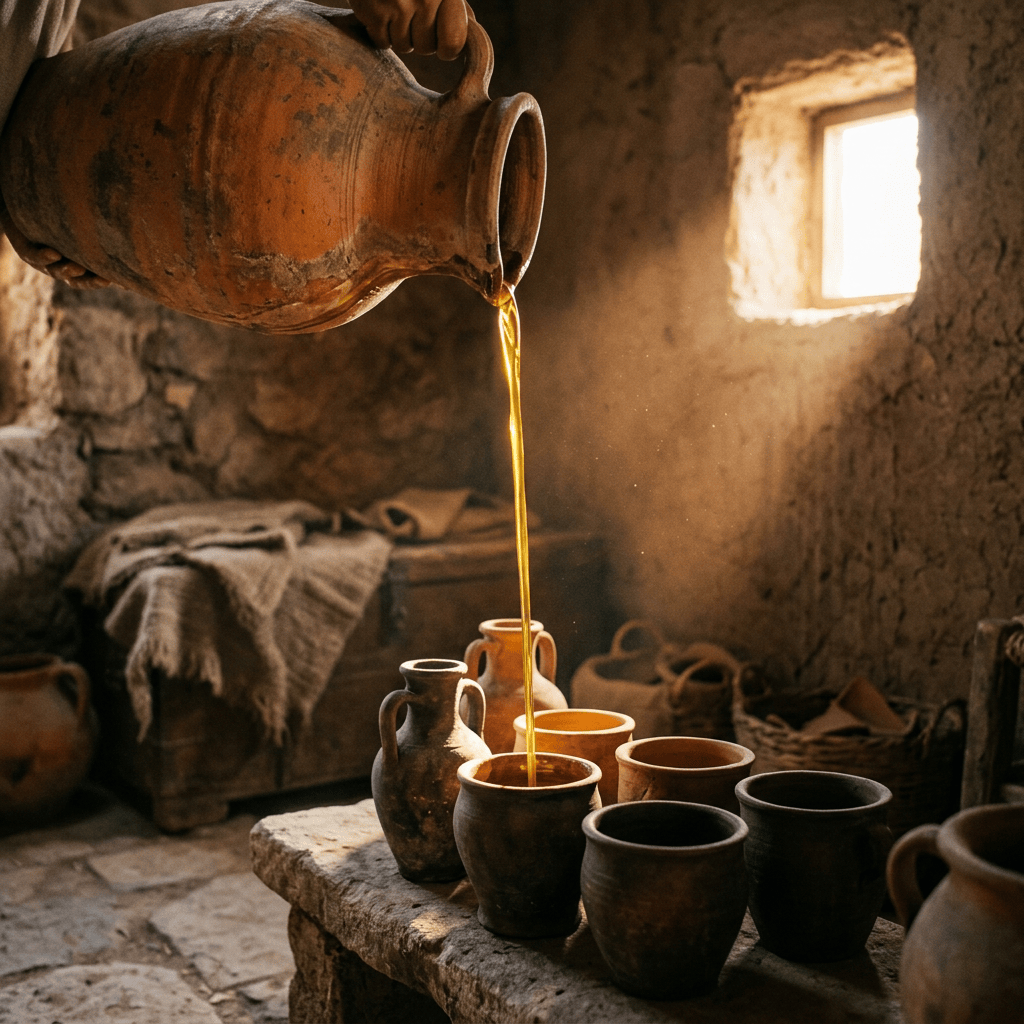
    Mara: That flask becomes the starting point for everything. She borrows empty jars, starts pouring, and the oil keeps flowing until the jars run out. She pays her debts and has enough left to live on.

    Pip: So the upshot is: the limitation wasn't the obstacle. The limitation was the opening.

    Mara: The post frames it plainly — we may look at our resources and see limitations, but God sees possibilities. Time, influence, ability — the question isn't whether you have enough, it's whether you'll offer what you do have.

    Pip: "Bring Your Empty" takes that a step further. The widow couldn't manufacture oil, but she could bring empty jars — and that's the move faith actually requires.

    Mara: And "I Believe, But Help My Unbelief" sits right alongside that — the father in Mark 9 is stretched to the end of his faith, crying out honestly, and Jesus meets him there anyway.

    Pip: Start with what you have. That's the thread running through all of it.

    Mara: Which raises a question about how we actually reach people once we've decided to show up.

    Quiet Influence And Encouragement

    Mara: Sometimes the most powerful thing you can offer isn't a solution — it's your presence. "Showing Up" opens with a line most of us know from the inside: "I don't know what to say."

    Pip: And the answer the post lands on is Romans 12:15 — "Be happy with those who are happy, and weep with those who weep."

    Mara: No perfect words required. A hospital visit, a phone call, a handwritten note — these communicate the one thing people most need to hear: you are not alone.

    Pip: "You're an Influencer" makes the same argument about scale. Your circle doesn't need to be large to matter. Jesus puts it in Matthew 5:14 — "You are the light of the world — like a city on a hilltop that cannot be hidden."

    Mara: Light doesn't perform. It just shines. Consistent modeling of love and compassion works the same way.

    Pip: And "Be Like Barnabas" names the person who did this best in the early church — someone who believed in Paul when others were skeptical, and gave John Mark another chance after failure.

    Mara: His name literally means son of encouragement. The post's point is simple: the world has critics. What it needs are more Barnabases.

    Pip: Presence, influence, encouragement — all of it assumes you're actually at peace enough to give it away.

    Contentment And Trust

    Pip: Finding contentment sounds passive, but "Finding Contentment" opens with a 114-year-old woman who called it a daily choice.

    Mara: Eunice Sandborn said she had a happy life and no complaints — and acknowledged there were seasons where she had to actively choose that. The post anchors on Hebrews 13:6: "Be satisfied with what you have. For God has said, 'I will never fail you. I will never abandon you.'"

    Pip: That's not a promise tied to circumstances. It holds in the lean seasons and the full ones alike.

    Mara: Exactly — and that's the ground everything else in this episode stands on.


    Pip: Offer what you have, show up for the people around you, and trust the one who doesn't abandon you in the lean seasons.

    Mara: Simple questions with a lot of weight. More next time.

  • Does God See Me?

    Does God See Me?

    Does God see me?

    This is a question many people ask, and you may be asking it today. Life is chaotic, so you’re really wondering if God sees you. It is a fair question, and the Bible gives us an answer.

    The Bible says God sees us. Psalm 139:1-4 says:

    “O Lord, you have examined my heart
    and know everything about me.
    You know when I sit down or stand up.
    You know my thoughts even when I’m far away.
    You see me when I travel
    and when I rest at home.
    You know everything I do.
    You know what I am going to say
    even before I say it, Lord.”

    When Scripture tells us that God sees us, it isn’t simply saying that He knows we exist. It is more than just seeing us. It means the Lord knows what we’re facing. He knows the details. He knows the things we haven’t told anyone else. He knows the fear behind the smile. He knows the tears behind the words, “I’m doing fine.”

    Psalm 139:2 reminds us that God understands our thoughts, even when we struggle to express them. Verse 4 tells us that before a word reaches our lips, he already knows it. The Lord knows us, and he sees us.

    Friends, you don’t have to pretend with God. You don’t have to hide your pain or find the perfect words to explain what you’re going through. The God who sees you already knows, and he invites you to come just as you are.

    You can bring the Lord your fears, pains, and struggles. He invites you, and he welcomes you.

    Remember, the Lord sees you, and he views you as someone who is priceless.

  • Bring Your Empty

    Bring Your Empty

    What if your emptiness is an opportunity for God to work?

    When life leaves us feeling drained, we often focus on what we don’t have. We don’t have enough strength to keep going, enough answers to know what to do, or enough resources to meet the challenges in front of us. We look at what is missing and wonder how things could possibly change.

    In 2 Kings 4, a struggling widow faced a problem bigger than anything she could solve on her own. When Elisha asked what she had in her house, her answer was simple: a little oil. It didn’t seem like much, but God was about to use it in a remarkable way.

    Before the miracle could happen, however, Elisha gave her an unusual instruction. He told her to collect empty jars.

    Why empty jars?

    An empty jar has room to receive something.

    Maybe that’s where some of us are today. We feel empty. Our strength is depleted. Our hope is gone. Our emotional reserves feel drained. We don’t have answers. We’re empty.

    Being empty doesn’t have to be the end of the story. It can be an opportunity for God to fill what we can’t fill ourselves.

    You see, the widow couldn’t manufacture oil, but she could bring empty jars. The widow brings what she had, and she let’s God do the rest.

    Sometimes, that’s all faith requires from us. It asks us to bring the Lord what we have. Bring him our emptiness, our uncertainty, our weaknesses, and trust him with what we bring. Notice how it works out for the widow.

    God provides more oil than the widow expected. At the end of the story, she goes back to Elisha and tells him what happened. He tells her, “Go, sell the oil and pay your debts. You and your sons can live on what is left.”

    The Lord didn’t merely give her enough to survive that moment. He provided enough to pay the debt, and enough for her family to live on. The problem she brought to God was bigger than her resources, but it wasn’t bigger than God’s provision.

    This widow teaches us that we can trust the God who sees us, works with what we have, and provides what we need according to His purposes.

    So, bring the Lord your empty today, and see what he does with it.

    Thanks for reading.

  • You’re An Influencer

    You’re An Influencer

    Your greatest opportunity to impact the world may be closer than you think.

    When we think of influence, we often think of a large Instagram following or millions of views on a YouTube video, yet our most impactful influence can actually be small in number. It can be at home, work, church, or among friends. The Lord maximizes our impact within our circle.

    As a parent, you shape the lives of your kids. As a coworker, you may encourage a struggling colleague. You may model faithfulness during challenging circumstances. These actions may never make headlines, but they matter tremendously.

    In Matthew 5, Jesus compares us to light. “You are the light of the world—like a city on a hilltop that cannot be hidden” (Matthew 5:14).  

    Light doesn’t have to do anything to draw attention to itself. It only has to shine, and in doing so, illuminates what is around it. It is very difficult to ignore light. It naturally has an impactful influence.

     In the same way, it can be very difficult to ignore consistent modeling of Jesus’ love and compassion. It organically creates an impactful influence for us.

    Friends, God has placed people in our lives for a reason. Model his love. Show his grace and compassion today. Our words, actions, attitudes, and example can be a light pointing others, right around us, toward Christ.

    Never underestimate the impact of consistent faithfulness. You may be influencing more people than you realize.

    Thanks for reading.

  • What Do You Have in Your Hands: A Lesson from a Flask of Oil

    What Do You Have in Your Hands: A Lesson from a Flask of Oil

    What do you have in your hands? What if the thing you keep overlooking is exactly what God wants to use?

    Imagine being a widow with creditors knocking at your door and no way to pay your debts. You have almost nothing left. Then someone asks you what you have, and your answer is a little jar of oil.

    What difference could that possibly make?

    One little jar of oil wasn’t going to come close to paying her debts. At least, that’s how it must have looked to her.

    We read her story in 2 Kings 4. This widow is facing a desperate situation, and the prophet Elisha asks her a simple question:

    “What do you have?”

    “Nothing at all, except a flask of olive oil,” she replies (2 Kings 4:2).

    And there it is. What she considers almost nothing becomes the starting point for God’s provision.

    Elisha tells her to borrow empty jars from her neighbors, go inside with her sons, and begin pouring oil into the containers. As she pours, the oil keeps flowing. Jar after jar is filled until there are no more containers. She sells the oil, pays her debts, and has enough left to support herself and her sons. God took what she already had and used it to meet a need she could not meet on her own.

    Throughout the Bible, we see God using seemingly insignificant things to accomplish extraordinary purposes. He used Moses’ staff, a few stones in David’s hand, and a boy’s lunch of five loaves and two fish to feed thousands. The lesson isn’t that the things we possess are magical or that God will always multiply our resources in the way we expect. It’s that what seems small or inadequate to us is never beyond God’s ability to use.

    We may look at our resources and see limitations, but God sees possibilities.

    • Maybe you don’t have the time you wish you had.
      BUT what if God could use the time you do have?
    • Maybe you don’t have the influence you wish you had.
      BUT what if God could use the influence you do have?
    • Maybe you don’t have the resources you wish you had.
      BUT what if God could use the resources you do have?
    • Maybe you don’t feel particularly gifted.
      BUT what if God could use the gifts you do have?

    We often find ourselves saying, “If only I had more time, more money, more influence, or more ability, I could make a difference.” Perhaps we’re asking the wrong question. What if we started asking, “Lord, what can You do with what I already have?”

    You may not have much in your hands today. Your time may be limited. Your resources may seem small. Your abilities may not feel impressive, but don’t be too quick to dismiss what you have.

    For the widow, that little jar of oil looked insignificant until God used it to change her family’s circumstances.

    You don’t have to wait until you have more to begin making a difference. Start with what you have, offer it to God, and trust him with what happens next.

    What do you have in your hands today that God could use?

  • Finding Contentment

    A Content Life

    In a 2010 interview, Eunice Sandborn, age 114, said she had a happy life. She didn’t have any complaints. She believed complaining was a choice, and in her 114 years, there were times she had to choose not to complain. Eunice was content as she celebrated her birthday making her the oldest living person in the world.

    The Search for Contentment

    It seems Eunice had found contentment. We all search for it. Some look for it in a big home, there are those who look for it in how many cars they own, and still others search for contentment in a bank account balance. Being content is a desire we all share, and Scripture encourages us to find our contentment in the Lord.

    Hebrews 13:6 says, “Don’t love money. Be satisfied with what you have. For God has said, ‘I will never fail you. I will never abandon you.”

    Finding Contentment

    Life has seasons of plenty and seasons of need. The writer of Hebrews reminds us the Lord is with us in both seasons. We may even find the most contentment in the leanest of seasons.

    The words of Hebrews 13:6 point to the complete reliability of God and his promises. God’s people can count on him no matter what comes.

    Remember, wherever you are in life today, the Lord is saying to you, “I will never fail you. I will not abandon you.”

    Please share this post.

  • Be Like Barnabas: The World Needs More Encouragers

    Be Like Barnabas: The World Needs More Encouragers

    Are you like Barnabas?

    He rarely receives the attention given to believers such as Peter and Paul, yet Barnabas had much influence on the early church. He truly lived up to his name, which means “son of encouragement,” and left a legacy worthy of modeling.

    Amid his generosity and faithfulness, we see that Barnabas believed in people. When others were skeptical of Paul, Barnabas welcomed him (Acts 9:26-27). When John Mark experienced failure, Barnabas gave him another opportunity (Acts 15:36-39). Again and again, Barnabas chose encouragement over criticism.

    I think we can agree the world has plenty of critics. What it desperately needs are encouragers. People who lift others up, and see potential where others see failure. People who offer hope when discouragement threatens to take over. The world is in need of encouragers, and every Christian has the opportunity to be like Barnabas.

    We have the opportunity to offer encouragement. It may be:

    • A kind word.
    • A supporting prayer.
    • A note of encouragement.

    These simple actions can change the course of someone’s day and perhaps even their life.

    Friends, channel your inner Barnabas. Ask God to help you become an encourager. Your encouragement may be a simple act, but have an impact greater than you will ever know.

    Thanks for reading.

  • “I believe, but help my unbelief.”

    “I believe, but help my unbelief.”

    His son was in trouble, and the father’s world was rocked almost to its core. Mark tells us an evil spirit had seized the boy and would often cause him to have convulsions. This would often cause the boy to fall into fire or water. The dad had faith, but his faith had been pulled to its very end. He couldn’t see a way out of this circumstance. Filled with desperation, he cried out to Jesus.

    As they were explaining the situation to Jesus, the people said, “The spirit often throws him into the fire or into water trying to kill him. Have mercy on us and help us if you can.’ ‘What do you mean if I can,’ Jesus asked. ‘Anything is possible if a person believes,” records Mark 9:22-23.

    Then verse 24 states, “The father instantly cried out, ‘I do believe but help me overcome my unbelief!”

    No Relief

    His son was enduring a horrific problem, and this dad’s world was shaking violently as he was amid a monstrous trial. We know he requested the disciples help, and we can assume he sought help elsewhere. Nothing was working though. No matter where he turned it seemed there was no end to this father’s crisis. Day after day, night after night, seizure after seizure the boy’s condition continued, and it seemed there was no relief from the crisis. Can you relate?

    Our world is rocked by a trial. As our world trembles, we search for solid footing, but we can’t find it. The longer we seek a solution, the more discouraged we become. We believe the Lord has a plan, but our eyes are blurred by the current season so we can’t see how to get through it. In these moments, Scripture suggests we follow the example of the father. We seek wisdom from the Lord to help us.

    James 1:5-8 encourages, “If you need wisdom, ask our generous God, and he will give it to you. He will not rebuke you for asking. But when you ask him, be sure that your faith is in God alone. Do not waiver for a person with divided loyalty is as unsettled as a wave of the sea that is blown and tossed by the wind. Such people should not expect to receive anything from the Lord. Their loyalty is divided between God and the world, and they are unstable in everything they do.”

    The Way Out

    While we may not see it today, we can have confidence the Lord will lead us out of our crisis. The way out may not be immediate. It may involve several steps, but the Lord will get us there. We know he will because he has helped so many before us.

    Remember how he helped the people of Israel. They were headed out of their trial in Egypt. They needed to cross the Red Sea, so God made the wind blow. They needed water, so the Lord made it pour out of a rock. The people needed to eat, so God made manna fall from Heaven. There were several steps in ending the trial, but the Lord showed Israel the way.

    Jesus stopped the father’s world from shaking. Jesus released the grip of the evil spirit. In 9:25-27, Mark records, “He said, ‘I command you to come out of this child and never enter him again.’ Then the spirit screamed and threw the boy into another violent convulsion, and left him. The boy appeared to be dead…. But Jesus took him by the hand and helped him to his feet, and he stood up.” The trouble was over. The boy was free and the father’s crisis ended because of Jesus.

    If your world is shaking today and you do not see how the Lord is going to get you through this crisis, remember he will. He has helped people get through, and he will help you. Echo the words of the father, “I do believe, but help me Lord because I don’t see it right now.”

    Please share this post.

  • Podcast Episode: Finding Faith In Change

    Pip: Get Encouraged lives up to its name this week — Chris Miller has been busy covering the kind of territory most of us navigate quietly: doubt, invisibility, setbacks, and the stubborn ordinary Tuesday.

    Mara: Right — the posts move through questions we bring to God, what it means to feel unseen, and how to find footing when plans fall apart or a new start feels daunting. Let's begin with what it looks like to bring our doubts to the right place.

    Growth and a Teachable Heart

    Pip: The question here is whether doubt disqualifies us — or whether what we do with our questions is what actually matters.

    Mara: The Thomas story makes the case directly. Jesus doesn't turn him away; he shows up and says, "Put your finger here, and look at my hands. Put your hand into the wound in my side. Don't be faithless any longer. Believe!"

    Pip: So the posture is: bring the hard question to the right person, not away from him. Thomas's doubt became a doorway, not a dead end.

    Mara: "A Teachable Heart" extends that same logic beyond doubt into daily growth. It quotes Proverbs: "Instruct the wise, and they will be even wiser." The obstacle to growth, the post argues, is believing we have nothing left to learn.

    Pip: Doubt and teachability turn out to be the same coin — both require admitting we don't have the full picture yet.

    Mara: On to what happens when that picture includes feeling completely invisible.

    Overlooked but Seen

    Pip: This segment sits with a specific ache — working hard, caring faithfully, and receiving exactly zero acknowledgment for it.

    Mara: "You Are Noticed" addresses that directly. Jesus says, "Give your gifts in private, and your Father, who sees everything, will reward you." The post lists who this covers: the caregiver, the behind-the-scenes volunteer, the worker doing honest daily tasks.

    Pip: There's something quietly countercultural about that. The whole post is essentially arguing that the unwitnessed act is not the wasted act.

    Mara: And the companion piece — the podcast episode on feeling overlooked — extends the same encouragement in audio form for anyone who'd rather listen than read. The throughline is the same: faithfulness in secret still registers with God.

    Pip: From being seen to figuring out where to go when the ground shifts — that's the next stretch.

    Change, Setbacks, and New Starts

    Pip: This is the biggest territory in the episode — what to do when the plan collapses, the start line resets, or an ordinary day feels like it's going nowhere.

    Mara: "Ordinary Days Have Extraordinary Opportunities" opens with a verse from Zechariah: "Do not despise these small beginnings, for the LORD rejoices to see the work begin." David tending sheep, the disciples at their nets, a boy with a lunch — the examples are all people who didn't know they were mid-story.

    Pip: So the ordinary Tuesday isn't a waiting room. It's already the thing.

    Mara: "When the Plan Changes" picks up the harder version of that — when the ordinary day becomes a derailed one. It quotes Proverbs 19:21: "You can make many plans, but the LORD's purpose will prevail." Ruth leaving her homeland, Paul's rerouted journeys — redirection reframed as protection or preparation.

    Pip: And then there's "The Courage to Begin Again," which is for the person who isn't just rerouted but fully starting over — job gone, relationship ended, dream dissolved.

    Mara: It leans on Joshua 1:9: "Be strong and courageous! Do not be afraid or discouraged. For the LORD your God is with you wherever you go." The point isn't that the path is clear — it's that the company is reliable.

    Pip: "Look Beyond Today's Pain to Tomorrow" carries that further — holding pain and hope in the same frame, the cross as the model for how suffering isn't the final sentence.

    Mara: Psalm 118:6 anchors it: "The Lord is for me, so I will have no fear." The post's argument is that present pain doesn't get the last word, even when we can't see what comes next.

    Pip: Doubt, invisibility, setbacks — turns out the thread running through all of it is the same question: is anyone paying attention?


    Mara: And the consistent answer across all of it is yes — whether it's Thomas getting a direct response, or the unseen caregiver, or the person restarting from scratch.

    Pip: More of that next time. Stay teachable.

  • Showing Up: Don’t Underestimate the Power of Your Presence

    Showing Up: Don’t Underestimate the Power of Your Presence

    “I don’t know what to say” has been my thought many times. A loved one or close friend is hurting, and I can’t manufacture words to ease the pain. Can you relate?

    When people are hurting, we often feel pressure to find the perfect words. We want to say something that will remove the pain or answer every question, but often, that isn’t possible. Our words fail, but there is still a way we can help. We can show up. This can be one of the greatest gifts we offer.

    “Be happy with those who are happy, and weep with those who weep,” encourages Romans 12:15.

    There’s power in our presence. It alone speaks volumes, so we don’t have to have the perfect words. Our presence says…

    • “I’m here.”
    • “I care for you.”
    • “I’m going to walk with you through this.”

    We see Jesus live this idea out through his ministry. Before saying anything, Jesus often showed up and had compassion on the person.

    Friends, don’t underestimate the power of your presence.

    • A hospital visit.
    • A phone call.
    • A handwritten note.
    • A conversation over coffee.

    These simple actions may seem small, but they communicate an important message:

    “You are not alone.”

    Many people are carrying burdens others cannot see. Your willingness to simply show up may become one of the greatest encouragements they receive, so don’t underestimate the power of presence.

    Sometimes, the greatest way we can express our love is by showing up.