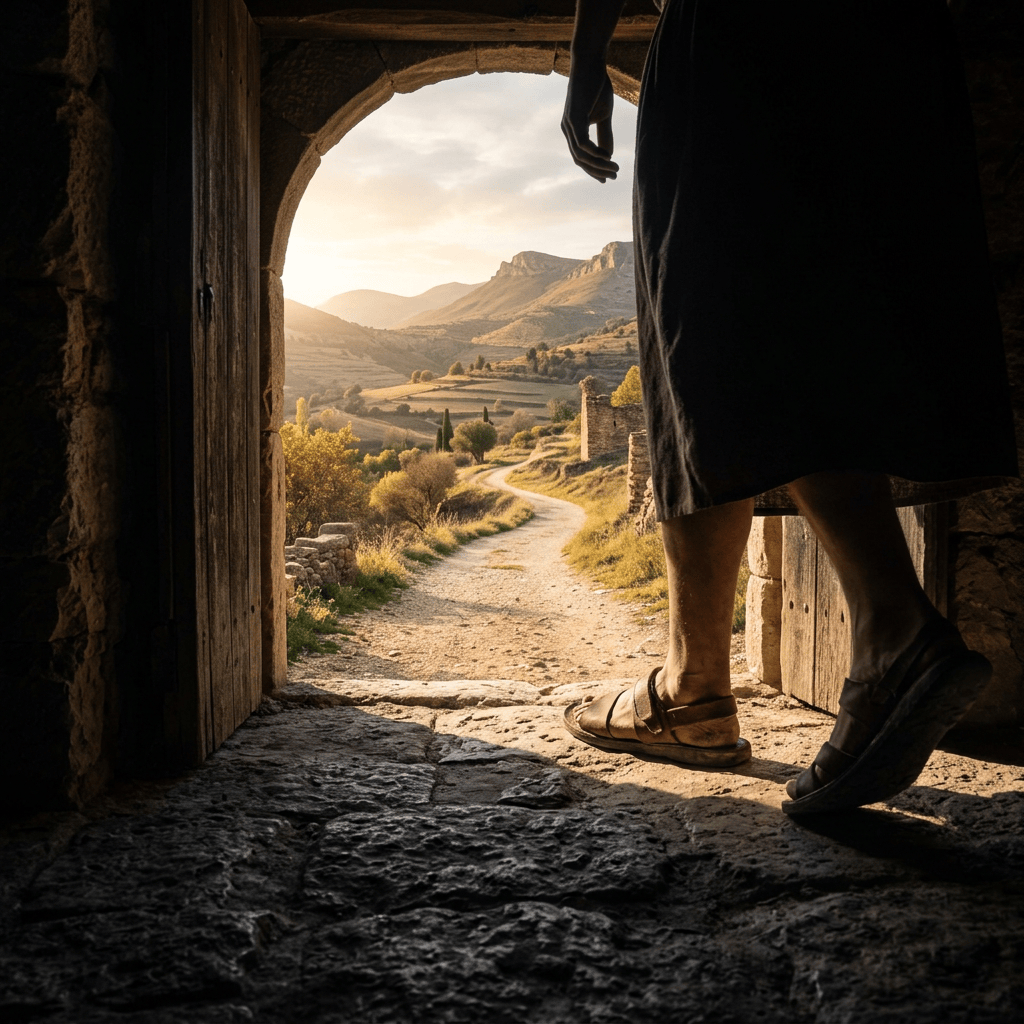
Our days are full of activities. In fact, it seems some days have every minute filled, and there is no room for anything else. Then comes the dreaded disruption.
The Bible offers advise for days like this. Luke shows us Jesus having one.
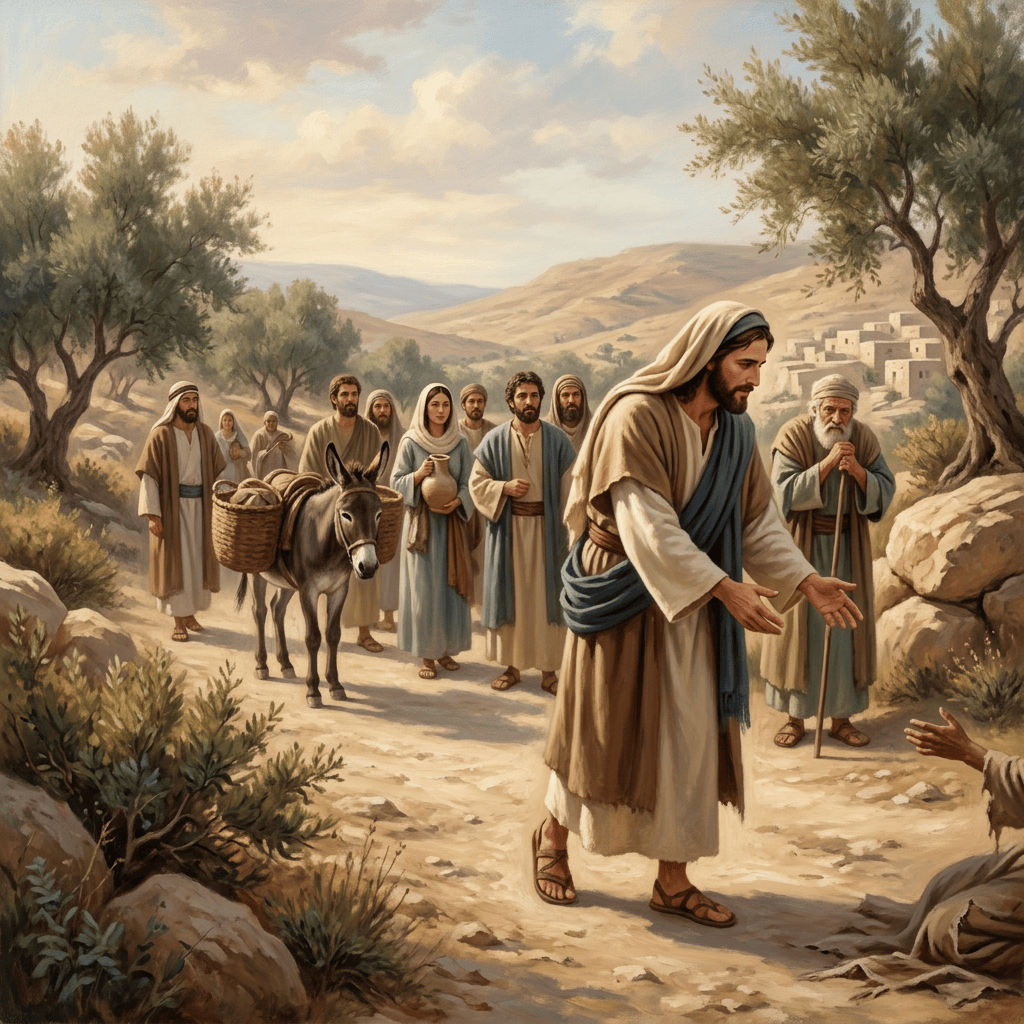
The plans for the day had been set. Jesus was on his way to help Jairus, but another need suddenly appeared.
Luke says, “As Jesus went with him, he was surrounded by the crowds. A woman in the crowd had suffered for twelve years with constant bleeding, and she could find no cure. Coming up behind Jesus, she touched the fringe of his robe. Immediately, the bleeding stopped” (Luke 8:42-44).
This woman touching Jesus wasn’t on the agenda. The plan wasn’t to stop by and help this lady on the way to Jarius’ home. She, and her need, were just in the crowd. Many people may have viewed her touching Jesus as a disruption to the day. She could have easily been met with frustration, but Jesus meets her with compassion.
“When the woman realized that she could not stay hidden, she began to tremble and fell to her knees in front of him. The whole crowd heard her explain why she had touched him and that she had been immediately healed. “Daughter,” he said to her, “your faith has made you well. Go in peace” (Luke 8:47-48).
Jesus didn’t view this interaction as a disruption. Rather, he viewed it as an opportunity. He took a moment and made time for this lady. The interaction may have been brief, but Jesus took time to have compassion.
What if we viewed disruptions to our day in the same way?
Perhaps God places certain interruptions in our path because someone needs encouragement. Perhaps he uses unexpected moments to slow us down and redirect our attention.
Try treating the next interruption as an opportunity rather than inconvenience. You never know what the Lord may accomplish through a moment you didn’t plan.
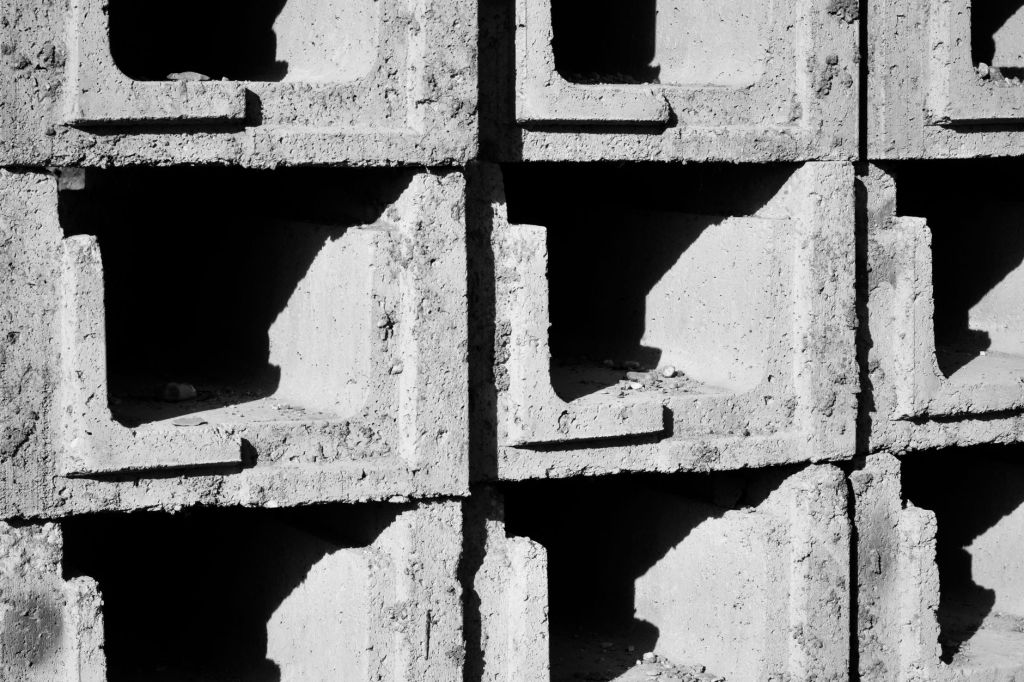
Imagine trying to run a race while carrying a concrete block. The bulkiness and extra weight would slow you down. It would take a lot of extra energy to carry the block. There’s no benefit to the block; it only makes the race more difficult.
Now, think of life. What concrete blocks are you trying to carry?
It may be…
Past mistakes.
Old grudges.
Unresolved guilt.
Disappointments.
Bitterness.
Regret.
These are heavy “blocks” that make running life’s race more difficult, and the Lord invites us to put them down.
Jesus says, “Come to me, all of you who are weary and carry heavy burdens, and I will give you rest” (Matthew 11:28).
Paul writes, “…but I focus on this one thing: Forgetting the past and looking forward to what lies ahead…” (Philippians 3:13).
The longer we carry unnecessary burdens, the more difficult it becomes to move forward. They’re heavy. They zap our energy quickly, so today may be the day to put them down.
Hebrews 12:1 encourages, “…let us strip off every weight that slows us down, especially the sin that so easily trips us up. And let us run with endurance the race God has set before us.”
Honestly, this could take courage. Perhaps you’ve carried the extra burden for so long that life will feel completely different without it. Different can be scary, but trust God with the “blocks.” You weren’t meant to carry them forever. Handing off the weight to the Lord will enable you to renew your strength.
Try laying them down today, and finish the race strong.
Pip: If your imagination has a ceiling, Get Encouraged is here to remind you the ceiling is the floor.
Mara: Today we're working through posts from Chris Miller covering three stretches of territory: what it looks like to wait on God's timing, whether God is actually present when things fall apart, and how faith moves when you're already knocked down.
Pip: Good news for anyone who has ever felt like they're hobbling. Let's start with what waiting and trusting actually cost you.
Waiting And Trusting
Mara: The thread running through these posts is the gap between where you are and where you hope to be — and what you do with that gap while you're standing in it.
Pip: "A Future Beyond Words" sets the stakes early, and the anchor is a verse from First Corinthians: "No eye has seen, no ear has heard, and no mind has imagined what God has prepared for those who love him."
Mara: So the upshot is that the future God is building for us is not just better than our circumstances — it is structurally beyond our ability to picture it. Our best descriptions, glorious, wonderful, eternal, are already undershooting.
Pip: Which makes waiting feel a little different. You're not just holding on; you're holding on to something you literally cannot overestimate.
Mara: "Take the Next Step" brings that down to ground level with the story of a widow in Second Kings. She has debt, no income, and creditors coming for her sons. Elisha tells her to gather empty jars and start pouring from the small jar of oil she already has. She can't see the outcome — she just pours.
Pip: The miracle doesn't appear before the step. It appears because of the step.
Mara: "Waiting on Dreams" sits right alongside that. It speaks directly to the person whose dream has been alive in their heart for years with no visible progress. The reminder there is pointed: an unfinished dream is not necessarily a forgotten dream. God may be preparing an opportunity, developing character, or working behind the scenes.
Pip: Three posts, one consistent ask — trust the one who holds the outcome, even when you can't read the plan.
Mara: And that question of trust gets harder when you're not just waiting but actually hurting. Which is where the next stretch of territory opens up.
God's Presence In Hardship
Mara: The question underneath both of these posts is the same one people ask in their worst moments: does God actually see what I'm going through, and is he going to stay?
Pip: "Does God See Me?" answers the first half directly, pulling from Psalm 139: "O Lord, you have examined my heart and know everything about me. You know when I sit down or stand up. You know my thoughts even when I'm far away."
Mara: What that passage is doing is more than confirming God's awareness. It's saying he knows the fear behind the smile and the tears behind "I'm doing fine." You don't have to perform or find the right words. He already knows.
Pip: That's a different kind of seen. Not surveillance — recognition.
Mara: "The Lord Isn't Leaving" takes the second half of the question. People walk away when life gets messy. The post asks plainly whether God does the same, and Psalm 139 answers: there is nowhere you can go that puts you beyond his presence. A spouse may leave, a friendship may end, a job may disappear — but the Lord stays.
Pip: Presence that doesn't have a threshold for too much trouble is a fairly remarkable offer.
Mara: It is. And the practical weight of it is this: you are not too far gone, too broken, or too complicated for God to remain. That holds whether you're waiting on something or actively falling apart.
Pip: Which leaves one question — what do you actually do while you're in it? That's the next piece.
Faith In Action
Pip: Sometimes the race tears your hamstring halfway through, and the question is whether you hobble forward anyway.
Mara: "Does Life's Race Have You Hobbling?" opens with British runner Derek Redmond at the 1992 Barcelona Olympics. His hamstring tears mid-race. He gets up and hobbles toward the finish. The passage he anchors to is Second Corinthians: "We are pressed on every side by troubles, but we are not crushed. We are perplexed, but not driven to despair. We get knocked down, but we are not destroyed."
Pip: Notice that every line has a but. The trouble is real — the but is the point.
Mara: And "Buy the Sheets" lands the everyday version of that same move: don't suspend your life waiting for perfect conditions. Today has people to love and blessings worth noticing, right now, even mid-hobble.
Pip: Keep moving. That's the whole instruction.
Mara: Wait with hope, trust that you're seen, and don't put the sheets back on the shelf.
Pip: The next episode will have more to say. We'll see you there.
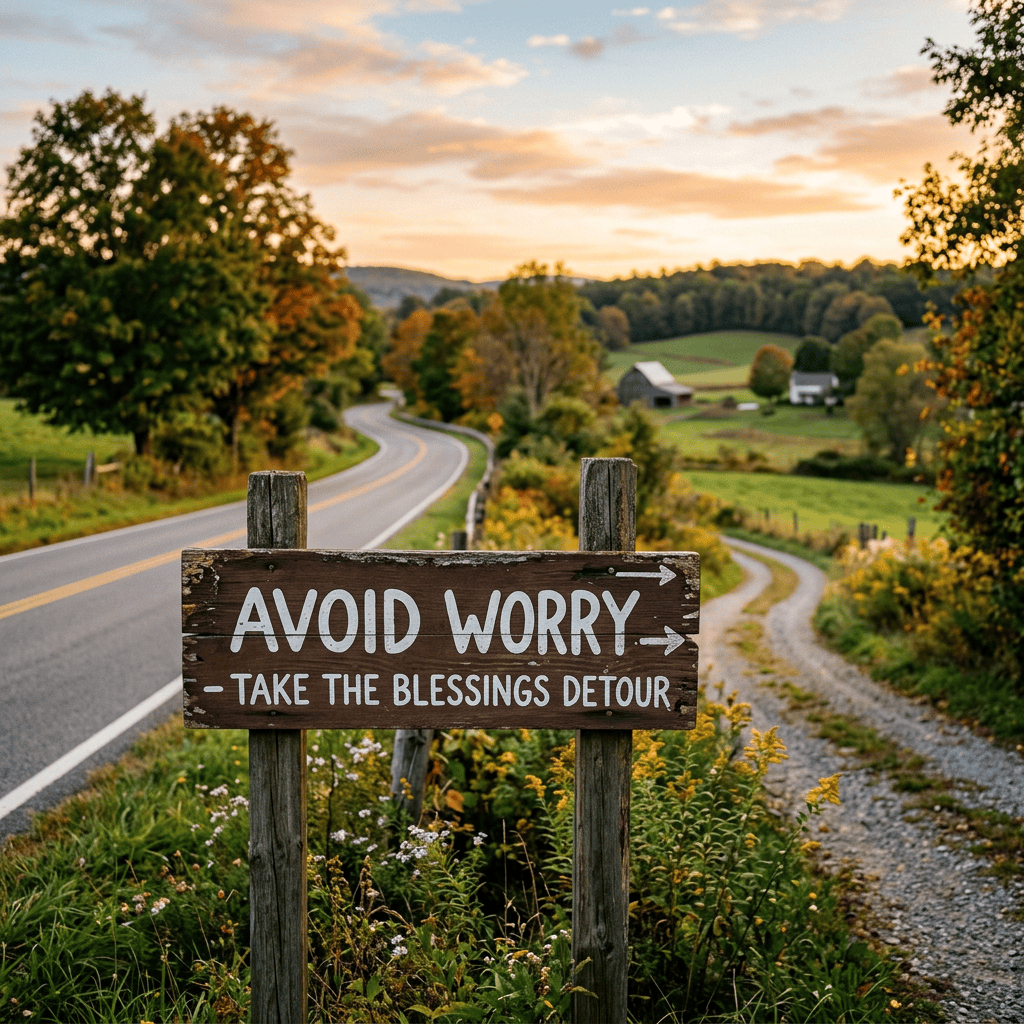
At first, you may think this is an odd question. You’re thinking, “Of course the Lord has provided for my needs today,” but have you stopped to count those blessings?
Sometimes, life’s worries can overshadow the blessings. It’s easy to spend today worrying about tomorrow. We think about upcoming responsibilities, unanswered questions, and problems that may arise. Before long, our minds become consumed with the future, so we may miss the blessings sitting right in front of us.
So don’t worry about tomorrow, for tomorrow will bring its own worries. Today’s trouble is enough for today.
Today’s blessings may not come in dramatic packaging. They may be the strength to get out of bed or an encouraging conversation. Perhaps you’re blessed with finances arriving at just the right time or peace you can’t explain amid a storm. God often works in ways that are easy to overlook when we are distracted by tomorrow’s concerns.
Take a moment today to notice the Lord’s blessings. Look for evidence of his goodness. You may discover the solution to tomorrow’s challenge is already unfolding today.
You may be waiting on a doctor’s call with test results, or maybe you’re facing a 12 hour work shift just to make ends meet. Today’s challenges can take many shapes, and staring them down may have you feeling discouraged.
While the challenges may be fierce, we can find hope in how the bible describes our future.
“No eye has seen, no ear has heard, and no mind has imagined what God has prepared for those who love him” (1 Corinthians 2:9).
Think about those words for a moment. Our future is beyond anything we can imagine. It is beyond comprehension. God’s plans for our future stretch past the limits of our imagination.
The best we can do is describe our future in Heaven as glorious, wonderful, and eternal. Scripture says there will be no more pain, suffering, or sorrow. We find great hope in this description alone, but it may pale in comparison to reality. God has wonderful plans for our future, and they are beyond description.
Friends, you may be facing a fierce challenge today, but you can cling to this hope. The best part of our future is still coming!
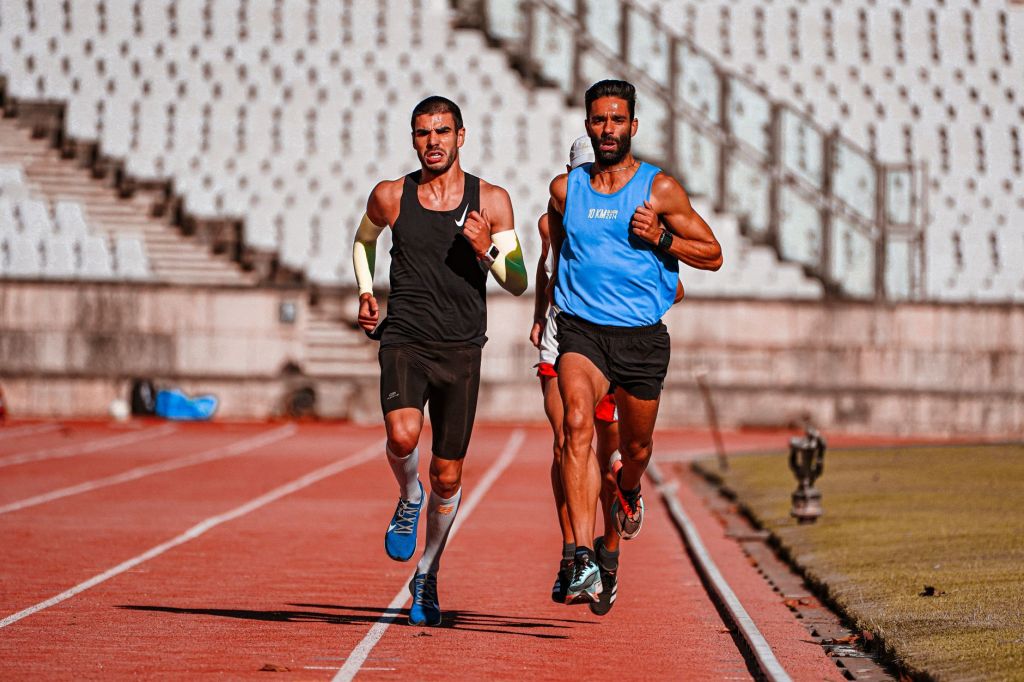
Getting to the Olympics is hard, and British runner Derek Redmond had overcome injuries and setbacks to be there. In 1992, Redmond thought his moment had come. He was competing in the 400-meter semifinal at the Barcelona games. Halfway through the race, his hamstring tore. He collapsed to the track, and his Olympic dream appeared to be over.
As the race continued, Derek struggled to his feet and began hobbling forward.
Insert yourself here. You’re running life’s race, and suddenly your hamstring is torn. You feel as if you’re hobbling. In these moments, we can find encouragement in the Bible.
“We are pressed on every side by troubles, but we are not crushed. We are perplexed, but not driven to despair. We are hunted down, but never abandoned by God. We get knocked down, but we are not destroyed” (2 Corinthians 4:8-9).
Notice all the times but appears in this passage.
Today may press us on every side, but we won’t be crushed.
Challenges may perplex us, but they won’t drive us to despair.
Adversity may hunt us down, but we are not abandoned by God.
Life may knock us down, but we are not destroyed.
Today’s circumstances and challenges may be enormous, but they don’t have the final word. God does.
Remember, Derek. He was hobbling toward the finish line. He wasn’t going to give up without trying to finish.
While Derek was hobbling forward, his dad was running out of the stands, brushing by security, and jogging to meet him. Derek’s dad put his arm around his son, and with tear-filled eyes, the two finished the race together.
Derek didn’t win a medal that day, but his story reminds us that a painful setback doesn’t have to be the end of our story.
While the challenge may look different, you may be facing an enormous one today. You may feel knocked down by unexpected circumstances, but don’t lose hope. What you’re facing today doesn’t have to define your tomorrow. With the Lord’s help, you’ll be able to finish the race.
What happens when a dream stays in your heart but takes years to become a reality?
Maybe you dream of starting a business, changing careers, or writing a book. Every time you think about it, you feel a spark of excitement. You can picture what it might look like, and you wonder what it would be like to see that dream come true.
However, years have passed, and you’re still waiting. The excitement that once filled your heart is beginning to fade. You wonder if your dream will ever become a reality. Maybe you’re even tempted to give up.
If this sounds familiar, the Bible offers some encouragement.
“Take delight in the Lord, and he will give you your heart’s desires. Commit everything you do to the Lord. Trust him, and he will help you” (Psalm 37:4-5).
One of the hardest parts of having a dream is learning to wait on the Lord.
We want answers now; we want to see progress. When nothing seems to be happening, discouragement can creep in. We may feel like throwing away the very dreams we’ve carried for years, but Scripture reminds us that God’s timing is different from ours. Throughout the Bible, we find people who had to wait for God’s promises to unfold. Their stories remind us that waiting doesn’t mean God has forgotten us.
Just because your dream hasn’t become a reality doesn’t mean the Lord has abandoned his work in your life. He may be preparing an opportunity, developing your character, or working behind the scenes. An unfinished dream is not necessarily a forgotten dream.
We may not understand why we have to wait or how everything will work out, but we can choose to trust the Lord.
Commit your dreams to him.
Keep seeking his direction.
Take the steps he puts before you.
Trust him with the timing and outcome.
The Lord sees the desires of your heart, and you can wait with hope since your future is in his hands.
Those words caught my attention as they came through the radio speakers. I wasn’t dreaming, and I hadn’t accidentally tuned in to some strange program. I was listening to a follower of Christ sharing a simple but powerful reminder.
“Don’t wait to buy the sheets!”
What did she mean? Don’t put off enjoying life today while waiting for tomorrow to arrive.
It’s easy to fall into that trap. We tell ourselves we’ll enjoy life when we reach a certain goal, get through a difficult season, or finally see our dreams come true. We keep looking ahead, waiting for life to get better, but what if we’re missing something wonderful in the process?
God has given us today, and we shouldn’t miss its blessings because we’re too busy waiting for tomorrow.
“This is the day the LORD has made. We will rejoice and be glad in it” (Psalm 118:24).
Perhaps you’re waiting on a relationship, new job, or opportunity. Keep looking forward with hope. The Lord knows the plans he has for tomorrow, but as you’re hoping, don’t overlook today’s blessings.
Friends, enjoy today. There are people to love and blessings to recognize. You don’t have to put life on hold until everything falls into place. The dream may still be ahead of you, but today has much to offer as well.
So, don’t wait for the perfect relationship to come before buying new sheets. Don’t wait for everything to fall into place before living a full life. Enjoy today.
What do you do when God asks you to take a step, but you can’t see how it will work out?
It’s easy to trust God when we can see a solution, but what happens when the bills are piling up, your resources are running low, and you have no idea how you’re going to make it?
That’s where we find a widow in 2 Kings 4. She is in a desperate situation. Her husband has died, her debts are mounting, and her creditors are coming to take her two sons as servants. She has nowhere to turn, so she goes to Elisha for help.
Elisha’s instructions may have surprised her. He doesn’t hand her money or tell her to organize a fundraiser. Instead, he tells her to ask her neighbors for as many empty jars as she can find, go inside her home, and begin pouring oil from the little jar she already has.
Imagine what must have been going through her mind. How could one small jar of oil possibly solve such a big problem?
But the widow obeys. She gathers the jars, goes inside, and begins to pour. The oil keeps flowing until every jar is full. She sells the oil, pays her debts, and has enough left to support herself and her sons.
The miracle began with a step of faith.
The widow couldn’t see how God would provide before she started pouring. She didn’t know how much oil she would have or how the story would end. She simply trusted the instruction she had received, and took the next step.
Faith often works this way. God doesn’t always show us the entire plan. Sometimes, he gives us enough direction to trust him today.
The widow had to pour the oil before she could see the miracle. Sometimes, we have to take that next step of faith before we see how God will work things out.
“Faith shows the reality of what we hope for; it is the evidence of things we cannot see” (Hebrews 11:1).
As you step into a new day, what step of faith is God asking you to take? You may not have all the answers, but you can trust the one who does.
People may walk away when life gets messy, but what about God?
When problems pile up, relationships fall apart, and you struggle to hold everything together, you may wonder if the Lord will eventually decide you’ve become too much trouble.
Psalm 139 gives us a reassuring answer. There is nowhere we can go, no mess we can face, and no burden we can carry that will put us beyond the reach of God’s presence.
“I can never escape from your Spirit! I can never get away from your presence! If I go up to heaven, you are there; if I go down to the grave, you are there” (Psalm 139:7-8).
No matter how messy life becomes, the Lord is going to always be there. There is not a day or burden heavy enough to cause him to walk away.
“If I ride the wings of the morning, If I dwell by the farthest oceans, even there your hand will guide me, and your strength will support me” (Psalm 139:9-10).
Friends, life is never going to be so messy that God decides to stop helping and walk away from us. A spouse may leave, friendship end, or job disappear, but the Lord will still be right beside us.
Today may be messy. You may face challenges you never expected. You may even feel alone, but remember this: people may walk away, circumstances may change, and life may fall apart. Even if they do, God is not going anywhere.