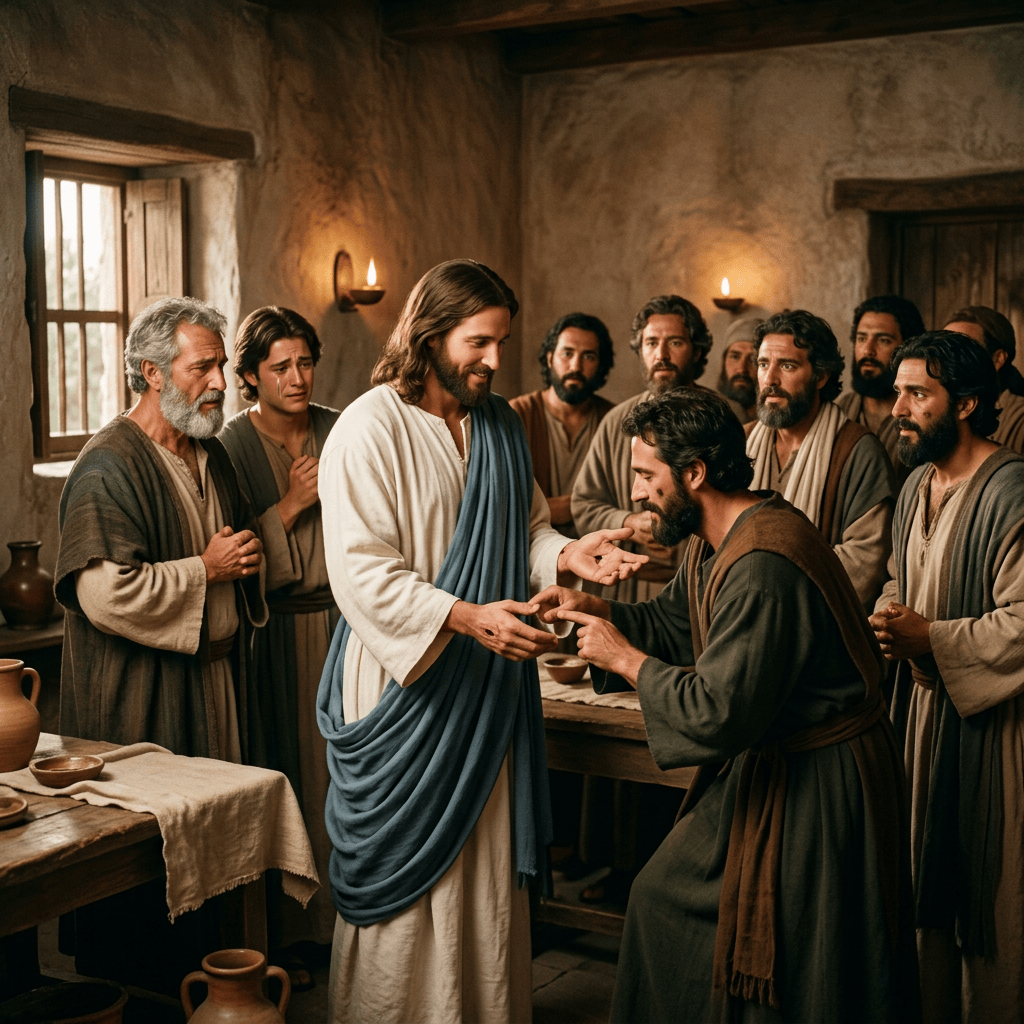
You’re not alone. Many people have questions, and the Lord welcomes our questions. Jesus shows us this truth in his response to Thomas.
Thomas struggled to believe because he wanted certainty. He wanted evidence. When he learned of Christ’s resurrection, Thomas said, “I won’t believe it unless I see the nail wounds in his hands, put my fingers into them, and place my hand into the wound in his side” (John 20:25).
Instead of rejecting Thomas, Jesus met him where he was.
“Eight days later the disciples were together again, and this time Thomas was with them. The doors were locked; but suddenly, as before, Jesus was standing among them. “Peace be with you,” he said. Then he said to Thomas, “Put your finger here, and look at my hands. Put your hand into the wound in my side. Don’t be faithless any longer. Believe!” (John 20:26-27).
Christ graciously provided what Thomas needed and strengthened his faith.
Many believers experience seasons of questions and uncertainty. We wonder why God allowed a certain situation. We struggle to understand his timing. We wrestle with difficult circumstances. As we do, Jesus meets us just as he did Thomas.
Questions do not automatically indicate weak faith. What matters is what we do with them. Thomas brought his doubts to the right person, and we should as well.
God invites us to seek Him honestly and sincerely. Scripture says, “Pour out your heart to him, for God is our refuge” (Psalm 62:8). The Lord desires for us to come as we are, which includes bringing our questions. The more we draw near to him, the more we discover that he is trustworthy.
If you have questions today, don’t run from God. Rather, run to him. The Savior who welcomed Thomas still welcomes searching hearts today.
Pip: Get Encouraged — where the month ends, a new one begins, and someone is quietly asking whether any of it is adding up to something.
Mara: Chris Miller has been writing through that exact tension this week — posts about remembering where God has already shown up, trusting him with what comes next, and handing over the weight when it gets too heavy to carry.
Pip: Let's start with the rearview mirror — remembering faithfulness before stepping into whatever's ahead.
Faithfulness And Reflection
Mara: The prompt here is simple but easy to skip: before you move into a new month, pause and actually account for what God has already done — answered prayers, provision, moments of sustaining grace.
Pip: "Remember His Faithfulness" reaches for Deuteronomy to make the case, and the verse lands with some weight: "Understand, therefore, that the Lord your God is indeed God. He is the faithful God who keeps his covenant for a thousand generations and lavishes his unfailing love on those who love him and obey his commands."
Mara: The upshot is practical — the Israelites built physical memorials for exactly this reason. Remembering past faithfulness is a faith-strengthening discipline, not just a sentimental exercise.
Pip: And the closing line earns its place: you may not know what lies ahead, but you know the one who goes before you. That's the bridge into what comes next — what does it look like to trust God when the path ahead isn't visible?
God's Ongoing Guidance
Mara: Two posts here share the same core question: when your circumstances feel unfinished or uncertain, how do you keep moving forward?
Pip: "God is Still Writing Your Story" opens with the feeling most of us recognize — goals slipping, plans not unfolding, discouragement settling in because all you can see is what hasn't happened yet.
Mara: The anchor verse is Philippians 1:6: "God, who began the good work within you, will continue his work until it is finally finished on the day when Christ Jesus returns."
Pip: What that means in practice is that the chapter you're stuck in right now is not the conclusion. Joseph didn't end in prison. David's years in hiding weren't the final word. Your current circumstances don't tell the whole story either.
Mara: "How Bright is Your Flash Light?" takes that same idea and gives it a concrete image — walking a dark trail with only enough light to see the next step. Psalm 119:105 is the hinge: "Your word is a lamp to my feet and a light to my path." Not a floodlight. A lamp.
Pip: So the ask isn't full visibility — it's enough light for the next step. Which is either deeply comforting or deeply inconvenient, depending on the day.
Mara: Both posts land in the same place: trust what you've been given for today, and keep moving. There's also a companion audio episode of the story post available on Spotify for anyone who prefers to listen.
Pip: And if moving forward feels less like walking a trail and more like carrying a pressure cooker — that's exactly where we're headed.
Burdens And Pressure
Mara: This segment is about weight — what to do when life piles on faster than you can process it, and where to actually put it down.
Pip: "Hand It Over: Giving God Our Burdens" is direct. The invitation is right there in Psalm 55:22: "Give your burdens to the Lord, and he will take care of you."
Mara: The plain-language consequence is that God doesn't expect you to carry those burdens alone. The post names the specific categories — work worries, financial strain, family difficulties, health concerns — and says the invitation is the same regardless of which one is weighing on you.
Pip: The honest footnote is that the burdens may not disappear immediately. But the promise is access to a strength and peace that exceed your own.
Mara: "Too Much Pressure" works the same territory through a pressure-cooker metaphor — useful under the right conditions, dangerous with too much buildup. The Psalmist in Psalm 119 is the anchor there: "As pressure and stress bear down on me, I find joy in your commands. Your laws are always right. Help me to understand them so I may live."
Pip: He's describing real pressure — consumed, troubled, surrounded — and still finding the pivot point in God's Word rather than in the circumstances themselves.
Mara: The post also pulls in John 14:1: "Do not let your hearts be troubled. Trust in God; trust also in me." The through-line across both posts is the same — you can't always control what's pressing in, but you can control where you turn with it.
Pip: Short version: hand it over. Easier said, worth doing.
Mara: Remember what's behind, trust what's ahead, release what's too heavy — it's a complete posture, not just three separate ideas.
Pip: And apparently one week's worth of posts is enough to outline a whole theology of not falling apart. We'll see what next week brings.
Imagine walking through the woods at night with nothing but a flashlight to guide your way. The trees are tall, the path is narrow, and darkness surrounds you. You turn on your flashlight, and a small beam of light cuts through the darkness.
You can see a few feet ahead. You can see where to place your next step, but beyond that, the path disappears into the darkness.
You might wish your flashlight were brighter. You want to see the entire trail, know where it leads, and understand what lies ahead, but for now, you have just enough light to keep moving forward.
Sometimes, that’s exactly what walking with God feels like. Most of us would like God to show us the entire path ahead. We want detailed plans, clear explanations, and complete certainty about what tomorrow holds. We want to know how things will work out, when our circumstances will change, and what challenges we might face along the way. Instead, God often provides enough light for only the next step.
Psalm 119:105 says, “Your word is a lamp to my feet and a light to my path.” Notice that the verse doesn’t say God’s Word is a spotlight illuminating the entire journey. It describes a lamp that provides enough light to guide our steps. Faith often works this way.
God may not reveal every detail of tomorrow, but he will provide what we need for today. Through his word, he gives us wisdom, direction, and encouragement to keep moving forward, even when we cannot see what lies ahead.
Perhaps you’re facing a difficult decision, waiting for an answer to prayer, or wondering how a challenging situation will turn out. You may wish God would turn on the floodlights and show you exactly where the road leads, but what if he’s already given you enough light for the next step?
Instead of worrying about the entire journey, focus on the next step. Trust the Lord with the things you cannot see, and faithfully follow the light he has provided.
Trust the Lord today, then trust him tomorrow. You may not be able to see the entire path, but you can rest in the assurance that God knows where it leads. The Lord will light your way, one step at a time.
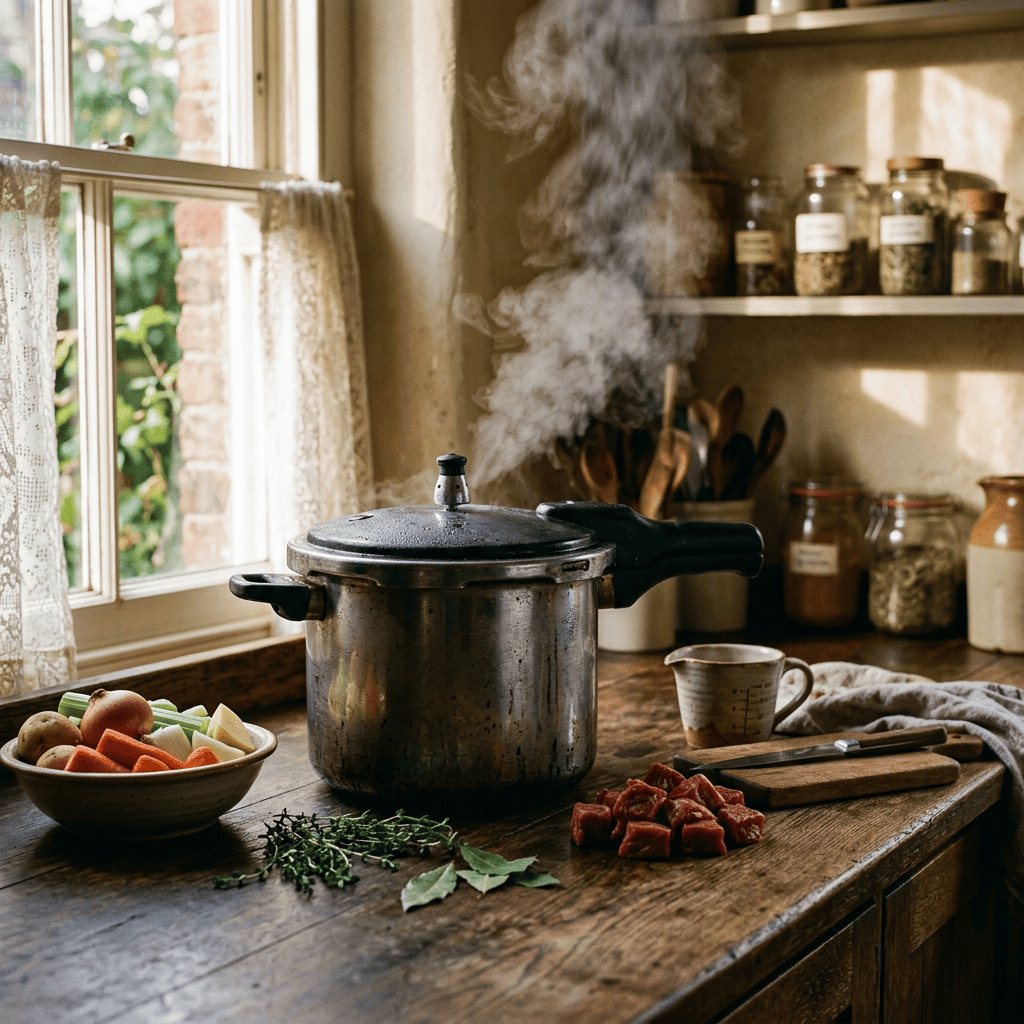
Life can feel like a pressure cooker. Some days, the pressure builds so quickly that we wonder how much more we can take.
Good cooks, which definitely doesn’t describe me, know that a pressure cooker can be a useful tool. It can turn a tough cut of meat into a tender, delicious meal. The heat and pressure work together to get the job done, but you need just the right amount of pressure. If you have too much pressure, you may end up with ketchup on your kitchen ceiling!
Life can feel much the same way. The pressures of everyday living come at us from all directions. Bills pile up, responsibilities seem never-ending, and decisions weigh heavily on our minds. We try to balance work, family, and everything else life throws our way. Sometimes, the pressure becomes overwhelming. We wonder how much longer we can keep going and where we can turn for relief.
If that sounds familiar, you’re not alone. The writer of Psalm 119 understood what it was like to feel overwhelmed. In verse 139, he describes being consumed with indignation. By verses 143–144, he acknowledges the troubles and pressures surrounding him, yet he finds comfort in God’s Word. He says, “As pressure and stress bear down on me, I find joy in your commands. Your laws are always right. Help me to understand them so I may live.”
Even when life pressed in on him, the Psalmist knew where to turn. He focused on the Lord and found encouragement in his Word. We can do the same.
When the pressure of life builds, remember…
The Lord is with you. You don’t have to face today’s challenges alone.
The Lord is trustworthy. Even when life feels uncertain, his promises remain true.
Jesus invites you to trust him. He reminds us in John 14:1, “Do not let your hearts be troubled. Trust in God; trust also in me.”
The Lord sees the bigger picture. We may not understand what he’s doing, but we can trust his wisdom and care as we walk through difficult seasons.
Jesus has promised us a future with him. The troubles of today are not the end of our story. He has promised to come again and take us to be with him (John 14:3).
Life’s pressure cooker can leave us feeling exhausted, anxious, and overwhelmed, but we don’t have to let the pressure steal our peace.
Today, take a moment to pause, turn to the Lord, and remember that he is with you. You may not be able to control everything happening around you, but you can trust the one who holds your life in his hands.
Are you feeling overwhelmed today? You’re certainly not alone. There are times when life can feel heavy. Responsibilities pile up, unexpected difficulties arise, and worries about the future begin stealing joy from the present. We all experience times like these, and when we do, the Bible offers encouragement.
“Give your burdens to the Lord, and he will take care of you” (Psalm 55:22).
Friends, God doesn’t intend for us to carry those heavy burdens alone. He invites us to hand those burdens to him, and he assures he will care for us.
Today, take a moment to identify what is weighing you down. It may be worries at work, financial struggles, difficulties in your family, or health concerns. Whatever the burden, the invitation is the same.
Give those burdens to the Lord in prayer. They may not disappear Immediately, but you will discover God’s strength is greater than yours and his peace surpasses understanding.
Pip: Welcome to Get Encouraged — where the waiting room has better theology than most self-help shelves.
Mara: Chris Miller has been writing this week about the things that quietly shape a life: trusting God's timing when answers don't come on schedule, finding stability when seasons shift, discovering that weakness isn't a disqualifier, and staying anchored when hard days arrive.
Pip: Big territory for a short week.
Mara: Let's start with what happens when the dream you're holding feels further away than ever.
Waiting Well: God's Timing and Unanswered Prayer
Mara: The question driving these posts is a practical one — what do you do when your goals stall, your prayers go unanswered, or the answer you receive isn't the one you wanted?
Pip: "Embrace the Waiting" frames the delay itself as something purposeful, and it reaches for a grounding image: "God often works beneath the surface long before we can see the results."
Mara: So the upshot is that the waiting isn't empty time — it's preparation you can't observe yet. The season of stillness is part of the construction, not a pause in it.
Pip: And then "Unexpected Answers to Prayer" pushes that further. It asks what happens when God answers — just not the way you asked.
Mara: That post goes directly to Isaiah 55, and the verse carries the weight: "My thoughts are nothing like your thoughts, says the Lord. And my ways are far beyond anything you could imagine."
Pip: Which is either deeply comforting or deeply unsettling, depending on which prayer you're currently waiting on.
Mara: Both posts land on the same anchor — Romans 8:28, that God works all things for good. The argument is that this promise holds in the waiting and in the surprise, not only in the resolution.
Pip: Trust the architect even when you can't see the blueprint. That idea carries right into what happens when life itself shifts around you.
Seasons Change. God Doesn't.
Mara: These posts use the literal turn of the calendar — summer giving way to fall — to ask a harder question: how do you stay steady when life's circumstances change without warning?
Pip: "Seasons Change. God Doesn't!" goes straight to the anchor: "I am the Lord, and I do not change," from Malachi 3:6. Short verse, full weight.
Mara: What that means in practice is that his character, his love, and his promises stay fixed even when finances, relationships, and health do not. The stability isn't in the circumstances — it's in who God is.
Pip: "The Changing Seasons" widens the lens with Ecclesiastes 3 — a time for everything — and makes the case that even the difficult seasons have a purpose: patience, faith, character.
Mara: And the closing note there is honest: you may not understand the season you're in, but this season is not forever. That's a harder comfort to hold, and the post doesn't pretend otherwise.
Pip: Steadiness in the hard seasons connects directly to what happens when the hard thing is your own sense of inadequacy.
Flaws, Availability, and Being Used Anyway
Mara: The central claim in "Embrace Your Flaws: God Can Use You" is that God's track record runs through imperfect people — Moses, Peter, David, Paul — and the common thread wasn't their résumés.
Pip: The post puts it plainly: "My grace is all you need. My power works best in weakness." Second Corinthians 12:9. The disqualification you're holding may be exactly the opening.
Mara: The practical upshot is availability over perfection. Bring the weakness; let the strength be his. There's also a companion episode on Spotify that extends this conversation for anyone who wants to keep going.
Pip: Ordinary people, extraordinary outcomes — that thread runs straight into how ordinary days carry more weight than we usually give them.
Holding On: Faith in the Storm and the Ordinary Day
Mara: "Still There Amid the Storm" opens with Job — a man who lost everything in a single day — and focuses on what he did next, which was not pretend everything was fine.
Pip: The passage is stark: "Job stood up and tore his robe in grief. Then he shaved his head and fell to the ground to worship."
Mara: Grief and worship, together, in the same moment. The post doesn't flatten that tension — it says we can hurt and admit we don't understand and still turn toward God. That's the model.
Pip: And then "Today Matters" brings it all the way down to Tuesday afternoon. A kind word to a coworker. A text to a friend. Five minutes of actually listening.
Mara: Paul's instruction in 1 Thessalonians 5:11 is the spine there: "Encourage one another and build each other up." Small interactions, ordinary days, real weight.
Pip: From Job's worst day to someone's quiet Tuesday — the scale shifts, but the call is the same.
Mara: Timing, seasons, weakness, hard days — the thread running through all of it is that steadiness isn't something you manufacture.
Pip: It's something you borrow. More from Get Encouraged next time.
What if one of our biggest blessings is prayer answered differently?
You pray to get a certain job, but an even better opportunity emerges. You’re dating someone, but the relationship falls apart even though you prayed to stay together. You later meet someone who is even more incredible. Our prayers go up, the Lord’s answers come down, and sometimes, they are not the answers we were expecting.
Most of us have experienced prayers that were answered differently than expected. We pray for one outcome and receive another. At first, this can be confusing and discouraging, but God’s wisdom is far greater than our own.
“My thoughts are nothing like your thoughts,” says the Lord. “And my ways are far beyond anything you could imagine. For just as the heavens are higher than the earth, so my ways are higher than your ways and my thoughts higher than your thoughts” (Isaiah 55:8-9).
We see only a small part of the story, while God sees the entire picture. He sees 5, 10, 15 years down the road, so his answers are always perfect.
Although we may not immediately understand the Lord’s answers, we can trust his character. The bible reminds us God is good and faithful. “For the Lord is good. His unfailing love continues forever, and his faithfulness continues to each generation” (Psalm 100:5). We are also reminded God works all things for our good (Romans 8:28). When His answers differ from our expectations, we can rest in the truth that His plans are better than our own.
What if you would have been given the first job you applied for? You would have missed an awesome opportunity waiting around the corner.
What if your high school crush would have became your spouse? You would have missed the incredible blessing of your current family.
Today, our prayers may not be answered in a way we are expecting, but we can rest in knowing the Lord knows what is best. So, if you are perplexed by the answer God gives, rest in the assurance he is good, faithful, and works everything for your good.
Pip: Get Encouraged lives up to its name this week — Chris Miller has been busy writing about the things that actually keep people up at night: guilt, fear, exhaustion, and Monday mornings.
Mara: That covers the territory well. We're looking at posts on healing and hope, gratitude and purpose at work, facing fear, and finding rest when the weight gets heavy.
Pip: Let's start with the hardest one — the question of whether your past has to define you.
Healing And Hope In Hard Times
Mara: These posts sit with people in the middle of pain — whether that's guilt, grief, or a life that stopped going according to plan.
Pip: The anchor here is a retelling of John 8, and the line that lands hardest is Jesus speaking directly to the woman the crowd wanted to stone: "Neither do I. Go and sin no more."
Mara: What the post draws out is that everyone else had already left. The accusers, the crowd — gone. And the point is that Jesus stayed, and what he offered wasn't a pass on accountability but something more specific: grace and a fresh start.
Pip: The post puts it plainly — her past did not have to define her future. And then it turns that outward, asking whether the reader needs to hear the same thing.
Mara: Romans 8:1 gets pulled in there too: "there is now no condemnation for those who belong to Christ Jesus." The guilt you keep carrying may already be taken.
Pip: That theme runs into the other two posts here. "Healing from a Broken Heart" covers the grief side — loss, betrayal, death — and leans on Psalm 34:18, which says the Lord is close to the brokenhearted.
Mara: And "Finding Hope in Unexpected Life Events" addresses the disorientation of plans collapsing — the diagnosis, the lost opportunity — and reminds readers that Joseph, Moses, and David all looked stuck before they weren't.
Pip: So whether the wound is guilt, grief, or derailment, the answer being offered is the same: you are not at the end of the story.
Mara: Which makes the next question — how you show up while you're still in the middle of it — worth sitting with.
Gratitude And Purpose At Work
Pip: If the healing segment is about surviving hard seasons, this one is about what you do with an ordinary Tuesday.
Mara: "Work as Worship" opens with Colossians 3:23-24: "Work willingly at whatever you do, as though you were working for the Lord rather than for people. Remember that the Lord will give you an inheritance as your reward, and that the Master you are serving is Christ."
Pip: So the upshot is that the audience for your work is not your employer or your performance review — it's larger than that, which reframes what counts as significant.
Mara: The post is specific about this. Answering a customer's question, stocking a shelf, emptying a trash can — each one is framed as something that improves a real person's real day. The scale of the task doesn't determine the weight of the impact.
Pip: That's the quiet argument: nothing done faithfully is wasted, which is either deeply comforting or a lot of pressure depending on your Monday.
Mara: "How Gratitude Transforms Tough Days" picks up the same thread from a different angle. It draws on 1 Thessalonians 5:18 — "Be thankful in all circumstances" — and makes the case that gratitude isn't denial of hardship; it's a shift in focus toward what God has already provided.
Pip: Counting blessings on a hard day sounds like advice from a greeting card, but the post earns it — it frames gratitude as something that sharpens your awareness of faithfulness rather than papering over difficulty.
Mara: And if gratitude can reframe a hard day at work, the next question is what to do when the obstacle isn't a bad Tuesday but something that stops you from moving at all.
Facing Fear And Taking Next Steps
Pip: Fear, the posts argue, wants to write your story for you — and it is not a reliable narrator.
Mara: "Embrace Your Next Step" puts it directly with Isaiah 41:10: "Don't be afraid, for I am with you. Don't be discouraged, for I am your God. I will strengthen you and help you. I will hold you up with my victorious right hand."
Pip: What that means in practice is that faith and fear are looking at the same obstacle from opposite directions — fear sees the limitation, faith sees what's behind it.
Mara: The companion piece, the podcast episode "Is Fear Holding You Back," extends that conversation in audio form for anyone who wants to keep going on this one.
Pip: When fear loses its grip, what's usually left is exhaustion — and that's where the last post comes in.
Rest For The Weary
Mara: "Find Rest: Jesus' Invitation for the Weary" is built around Matthew 11:28-30: "Come to me, all of you who are weary and carry heavy burdens, and I will give you rest."
Pip: The post is careful to say you don't have to wait until the burden is already gone to accept that invitation — you come now, with the weight still on.
Mara: Worry, anxiety, stress, past mistakes, relational difficulty — the post lists them as examples, but the offer is the same regardless of the source. Rest is the promise attached to coming.
Pip: Grace for the past, purpose in the ordinary, courage for the next step, rest for right now — that's a lot of ground to cover in a week.
Mara: The through line is that none of it requires perfect circumstances first. More on that next time.
Will I heal from a broken heart? This is a question most everyone will ask at one time or another.
Heartbreak is one of life’s greatest challenges, and we are certainly not strangers to this pain. Heartache comes to us in any number of ways. The person we thought we were going to marry walked away from us. The child who should have outlived us didn’t. The husband who pledged his faithfulness was anything but faithful. The spouse of 50 years was ripped from our arms by death. The pain of a broken heart is not a foreign experience.
Whether caused by loss, disappointment, betrayal, or shattered expectations, the pain is real, and can feel overwhelming. The encouraging truth is that God does not keep His distance from the brokenhearted. He draws near. Psalm 34:18 says, “The Lord is close to the brokenhearted; he rescues those whose spirits are crushed.”
The Lord understands our pain better than anyone else, and he doesn’t leave us by ourselves when we’re hurting. He’s right beside us. He sees every tear, hears every prayer, and knows every burden we carry. And, he will help you heal from a broken heart.
Healing doesn’t always happen overnight, but God is faithful. Little by little, he restores hope. He strengthens weary hearts. He reminds us that painful chapters are not the end of the story.
If your heart is hurting today, remember that you are not walking through this season alone.
Pip: Get Encouraged arrives this week with a cluster of posts that all seem to circle the same restless question: what do you do when life feels like it is moving faster than your faith can keep up?
Mara: Chris Miller is the writer behind all of it — covering worry, silence, gratitude, neighbor love, and what it looks like to stay rooted when the wind picks up. Let's start with the territory a lot of us know too well: trusting God through silence and worry.
Trusting God When Worry Knocks
Pip: The question running through this segment is one most people won't admit out loud — what do you do when worry fills the calendar the same way meetings do, or when you pray and hear nothing back?
Mara: The post "Today's Tasks: Why Worry About Tomorrow?" sets it up directly. Jesus says, "Don't worry about tomorrow for today has enough worries of its own."
Pip: Which is either deeply comforting or the most efficient out-of-office reply ever written. But the real point stands — today's agenda is already full; worry about tomorrow is an uninvited guest.
Mara: "Understanding God's Silence: Trusting in His Timing" takes the harder case — when prayer feels like it's bouncing off the ceiling. It points to Job, Joseph, and the silence before Jesus' birth as examples where God was working invisibly. Psalm 46:10 is the anchor: "Be still, and know that I am God."
Pip: That's the practical upshot — silence isn't absence. The post is essentially saying God's timing has a track record, even when you can't see the work in progress.
Mara: "Overcoming Worry: Biblical Insights for Peace" extends that into daily life, pointing to birds and flowers as creation's sermon on provision. And there's a Spotify episode, "Are You Worried? A Practical Way to Help Overcome Worry," that offers a more hands-on angle for listeners who want to take the next step.
Pip: From worry about tomorrow, it's a short walk to how we see the people standing right in front of us today.
Gratitude, Neighbors, and What We Choose to See
Pip: The frame here is perspective — specifically whether gratitude and neighbor love are feelings that happen to us or choices we make about what we're looking at.
Mara: "Finding Gratitude in Every Situation" quotes Paul from Colossians 2:7, saying that when our lives are rooted in Christ, we will "overflow with thankfulness." Not occasionally find something — overflow.
Pip: The post illustrates it with a neighbor's fallen tree that took out an old, ugly bush they'd been wanting removed anyway. Circumstances unchanged; perspective shifted.
Mara: "Seeing Our Neighbor as God Does" carries that outward — asking whether we extend the same generous view to the people who frustrate us that we extend to ourselves, because God's love covers them too.
Roots Deep Enough to Hold
Pip: When the wind actually arrives — not as a metaphor but as a literal fallen tree — the question becomes whether your roots were deep enough before the storm started.
Mara: "Strengthening Your Faith Roots in Tough Times" opens with exactly that: a neighbor's evergreen going down on a sunny, windy day. The diagnosis is the root system, not the wind. Paul's words from Colossians 2:6-7 follow: "Let your roots grow down into him and let your lives be built on him, then your faith will grow strong."
Pip: So the upshot is practical — you can't control the wind, but you can decide how deeply you're rooted before it arrives.
Mara: The post offers four concrete suggestions: daily time in Scripture, prayer, recalling God's faithfulness, and cultivating thankfulness. "Why Labor Day Reminds Us to Work Hard and Rest Well" adds a companion idea — that rest itself is part of God's design, not a failure of productivity. Jesus' invitation in Matthew 11:28 is the anchor there: "Come to me, all you who are weary and burdened, and I will give you rest."
Pip: Deep roots, honest rest, and a perspective that can find the blessing in a fallen tree. Not a bad place to land.
Mara: Worry, silence, gratitude, neighbors, roots — it's all circling the same question of where we're anchored when life gets loud.
Pip: Next time, we'll see what else is growing over at Get Encouraged. Stay rooted.