Tag: perspective

  • Podcast Episode: Kindness Gratitude And Guidance

    Podcast Episode: Kindness Gratitude And Guidance

    Pip: Get Encouraged is doing what it says on the tin this week — which, in a news cycle that mostly says something else entirely, is either countercultural or just stubborn. Either way, Chris Miller has been busy.

    Mara: The posts cover a lot of ground worth slowing down for — gratitude as a daily practice, how God tends to guide through the quiet and ordinary, and what it looks like to honor real sacrifice. Let's start with kindness and gratitude.

    Everyday Kindness And Gratitude

    Pip: The premise here is simple but a little uncomfortable: what if thankfulness isn't contingent on circumstances going well?

    Mara: That's exactly the frame. The post on gratitude opens with a boy who thinks Thanksgiving should come after Christmas — more gifts, more reasons to be thankful. But the piece pushes back with Hebrews 13:15: "Through Jesus, therefore, let us continually offer to God a sacrifice of praise."

    Pip: That word "continually" is doing real work there. Not "when things are good." Not "when prayers land the way you hoped." Continually — which the post acknowledges sometimes means praise really is a sacrifice.

    Mara: Right, and it offers four anchors for that: God's constant presence, his unchanging character, the promise that current circumstances aren't permanent, and the gift of an ordinary day itself.

    Pip: The World Kindness Day piece picks up the outward side of this — not just receiving gratitude but extending it. Salt and light as a daily operating mode, not a once-a-year occasion.

    Mara: And the kindness piece lands on a practical question: what if people could count on Christians to demonstrate kindness every day, not just on November 13?

    Faith, Guidance, And Transformation

    Pip: This segment is really about the gap between asking God for something and recognizing when the answer shows up.

    Mara: The post "When the Answer is at the Door" makes that gap almost comic. Acts 12 — believers gathered to pray for Peter's release from prison, and when Peter actually arrives at the door, they tell the servant girl she's out of her mind. Acts 12:13–16: "Peter knocked at the outer entrance, and a servant named Rhoda came to answer the door. When she recognized Peter's voice, she was so overjoyed, she ran back without opening it and exclaimed, 'Peter is at the door!'"

    Pip: They prayed for the thing, the thing happened, and they left the thing standing outside knocking. The upshot being: answered prayer can arrive in a shape we don't quite recognize.

    Mara: The post on guidance — "Out of the Ordinary" — makes a related point. Elijah's story from 1 Kings 19 shows God's voice not in the wind, earthquake, or fire, but in a gentle whisper. Guidance comes through a passage of Scripture, a friend's advice, a closed door.

    Pip: Quiet channels. Which takes some patience to tune into when you're waiting for the earthquake.

    Mara: "The Person Who Could Change the World" extends this into how we see other people. Ananias is asked to go to Saul — the man actively persecuting Christians — and the post asks what happens when we're willing to reach toward someone whose potential we can't yet see.

    Pip: And "Look Past the Cover" runs the same thread through Samuel misjudging David's brothers. The Lord's line to Samuel is direct: "People judge by outward appearance, but the Lord looks at the heart."

    Mara: The question the post leaves open is worth sitting with — what would change if we tried to see people through that lens instead of our first impression?

    Pip: Which is a short walk from Veterans Day and what it means to honor sacrifice you didn't personally witness.

    Service And Sacrifice

    Pip: Honoring veterans is the subject here, and the post doesn't reach for easy sentiment.

    Mara: It anchors on John 15:13: "Greater love has no one than this, than to lay down one's life for his friends." The post connects that to what veterans and their families have carried — often quietly, often for years.

    Pip: And it ends practically: thank someone, listen to their story, check on a veteran in your community. Show appreciation through action, not just memory.


    Mara: Gratitude, guidance, kindness, sacrifice — these posts are all circling the same question, really: how do ordinary days become something more intentional?

    Pip: Turns out the answer is usually quieter than expected. More like a gentle whisper than an earthquake. More next time.


  • What if Love Was the Answer?

    What if Love Was the Answer?

    What if love was the answer?

    There’s no doubt we live in a world full of hurting people. We’re all facing our own difficulties, carrying burdens others may never see, and navigating challenges that aren’t always easy to explain. Sometimes, a simple expression of love can make a greater difference than we realize.

    I’m not referring to romance, chocolate, and flowers. I’m talking about the kind of love Christ offers. It’s a love that looks beyond outward appearances and sees the heart. It’s a love that sees people the way God sees them.

    In his book 18 Words to Live By: A Father’s Wisdom for What Matters Most, author Kent Sanders reminds us that love is valuing another person. We ascribe worth to them, and we recognize they have something valuable to offer.

    Jesus demonstrated this kind of love repeatedly. Because of his love, Jesus touched lepers, welcomed children, comforted the hurting, and restored broken lives. He looked beyond people’s circumstances, reputations, and past mistakes to see the person. He treated people with dignity, compassion, and grace.

    What does demonstrating this kind of love look like?

    • Forgiving when holding a grudge feels easier.
    • Offering grace when criticism seems justified.
    • Serving when there is little chance of recognition.
    • Choosing compassion instead of indifference.
    • Taking time to listen when someone simply needs to be heard.
    • Recognizing the value of someone others might overlook.

    It may not be easy. Loving others doesn’t mean we will always agree with them, approve of their choices, or find it convenient to put their needs ahead of our own. Sometimes, it requires setting aside our pride, extending patience, and choosing to respond differently than we might naturally want.

    Isn’t this what Christ has done for us? We have experienced his love, grace, and mercy. Now we have the opportunity to extend that same love to others.

    Dear friends, since God so loved us, we also ought to love one another.

    1 John 4:11 (NIV)

    The world doesn’t need more criticism, indifference, or division. It needs more people willing to demonstrate the love of Christ. What if love really was the answer? Let’s be the ones who demonstrate it.

    Thanks for reading, and if you’re looking for a good book full of practical advice, you may want to consider 18 Words to Live By: A Father’s Wisdom for What Matters Most. It is a quick read packed with practical advice. You can find it on Amazon.

  • World Kindness Day: A Challenge to Show Kindness Every Day

    World Kindness Day: A Challenge to Show Kindness Every Day

    What if one small act of kindness could make someone’s day a little brighter? A few encouraging words, a helping hand, or a little compassion could make a bigger difference than we realize.

    Today is World Kindness Day, a great reminder that our actions can make a difference in the lives of others, but for Christians, kindness isn’t just something to celebrate one day a year. It’s an opportunity to live out what Jesus taught us every day.

    In Matthew 5, Jesus says:

    “You are the salt of the earth … You are the light of the world, like a city on a hilltop that cannot be hidden.”

    He goes on to explain that no one lights a lamp and hides it under a basket. Instead, the lamp is placed where it can provide light for everyone. Then Jesus makes this application:

    “In the same way, let your good deeds shine out for all to see, so that everyone will praise your heavenly Father” (Matthew 5:13–16).

    Salt was valuable for preserving food and adding flavor. Light illuminated dark places, helping people see where they were going. Both served a purpose and made life better for those around them.

    Jesus calls his followers to do something similar. We are to make a difference in the world around us by reflecting his love, sharing his truth, and showing kindness to others. Our actions should point people toward him.

    World Kindness Day is celebrated each year on November 13. It’s a day designed to encourage kindness and help unite people through simple acts of compassion. That’s a wonderful goal, but I believe Christians have an opportunity to take this message a step further.

    What if kindness wasn’t just something we practiced on November 13, but something people could count on us to demonstrate every day?

    Consider how Jesus treated others.

    • He treated people with love. Even when others were difficult to love, Jesus demonstrated compassion and grace.
    • He loved his enemies. He taught his followers to love their enemies and pray for those who persecuted them (Matthew 5:44).
    • He showed compassion. Jesus saw people who were hurting and responded with care.
    • He offered hope. His words brought truth, encouragement, and life to those who needed it.
    • He extended grace. Jesus didn’t define people by their failures. He offered forgiveness and called them to a new way of living.

    We won’t do these things perfectly, but we can choose to follow Jesus’ example.

    Maybe being salt and light today means encouraging a coworker who is having a difficult day. Perhaps it’s offering to help a neighbor, patiently listening to someone who needs to talk, or extending grace to someone who has frustrated us.

    These actions may seem small, but we never know how God might use them to make a difference.

    Happy World Kindness Day! Let’s celebrate by showing kindness today, then carry that same spirit into tomorrow and every day that follows.

  • Reasons to Always Offer Gratitude

    Reasons to Always Offer Gratitude

    While shopping for a turkey for Thanksgiving dinner, a little boy made an interesting observation to his mother.

    “Thanksgiving should come after Christmas. Then we would have more reasons to be thankful!”

    It’s an interesting thought. After all, Christmas brings presents, celebrations, family gatherings, and plenty of excitement. The little boy was thinking he would have more reasons to be thankful, but we can have gratitude even when life isn’t going well.

    In the fast-paced, bad-news culture in which we live, it’s easy to overlook our blessings. We hear about what is going wrong, worry about what might happen next, and sometimes become so focused on our circumstances that we forget the many reasons we have to praise the Lord.

    Always Have Gratitude

    The writer of Hebrews encourages us to make gratitude a continual part of our lives.

    “Through Jesus, therefore, let us continually offer to God a sacrifice of praise…” (Hebrews 13:15).

    Notice the word continually. We aren’t told to offer praise only when life is good, our prayers are answered, or everything goes according to plan. We are encouraged to praise the Lord continually.

    That doesn’t mean life is always easy or that we should pretend our struggles don’t exist. Sometimes, praise really is a sacrifice. It takes intentional effort to look beyond our challenges and remember the goodness of God.

    Reasons to Be Thankful

    We don’t give thanks because it’s been a perfect year or because everything in life is going our way. For many of us, that simply isn’t the case. However, regardless of our circumstances, we still have reasons to offer thanks.

    Here are four reminders:

    1. The Lord is continually with us. God promises never to leave us or abandon us. We don’t have to face today’s challenges alone. His presence is a constant source of comfort and strength.
    2. The Lord never changes. Hebrews 13:8 reminds us that Jesus Christ is the same yesterday, today, and forever. The world around us changes, our circumstances change, and people sometimes change their minds. But we can count on the unchanging character and promises of Jesus.
    3. Our current circumstances are not permanent. Whatever we are facing today, it isn’t the end of our story. We have the promise of Christ’s return and the hope of spending eternity with him. There is something wonderful about knowing our best days are still ahead.
    4. The Lord has given us the gift of life. Every new day brings another opportunity to experience his goodness, share his love, encourage someone, and make a difference. Even an ordinary day is a gift worth appreciating.

    What’s on Your Thankful List?

    What reasons do you have to be thankful today?

    Take a moment to make a mental note of your thankful list. Don’t overlook the ordinary blessings. Sometimes, the things we take for granted are the very things we would miss the most.

    Maybe life hasn’t gone the way you planned this year. Perhaps you’re facing challenges that make it difficult to see the good around you. Don’t let today’s troubles cause you to overlook yesterday’s blessings or tomorrow’s promises.

    Dwell on the goodness of God, count your blessings, and continually offer him a sacrifice of praise.

    Thanks for reading.

  • Honoring Our Veterans

    Honoring Our Veterans

    Some sacrifices are easy to see. Others are carried quietly for years.

    Today, we pause to honor the men and women who have served our country. We recognize their courage, commitment, and the sacrifices they and their families have made. Whether their service took them across the world or kept them closer to home, we are grateful for their willingness to serve.

    As we pause today, I’m reminded of Jesus’ words in John 15:13:

    “Greater love has no one than this, than to lay down one’s life for his friends.”

    Jesus spoke these words to his disciples as he prepared them for what was ahead. His words remind us that love is more than something we say. Love is demonstrated through our actions, our willingness to serve, and our concern for others.

    Our veterans have demonstrated a willingness to put the needs of others ahead of their own. Their service gives us an opportunity to reflect on the value of sacrifice and the importance of never taking others for granted.

    First John 3:18 offers another important reminder:

    “Dear children, let’s not merely say that we love each other; let us show the truth by our actions.”

    Today, we can put those words into practice. We can thank a veteran, listen to their story, check on a veteran in our community, or simply let someone know their service has not been forgotten.

    We may not fully understand the experiences of those who have served, but we can show our appreciation through genuine acts of kindness and gratitude.

    This Veterans Day, let’s do more than remember. Let’s show our appreciation.

    To every veteran, thank you for your service, your sacrifice, and your willingness to serve others. May you know that you are appreciated today and throughout the year.

  • Look Past the Cover

    Look Past the Cover

    Do you judge a book by the cover?

    Most people do. We’re perusing Amazon. Multiple book covers are in front of us, and we make a snap decision on how to respond to the book based on the cover.

    Now, take the judgment question deeper.

    Do you judge a person based on appearance?

    I know we’d all like to say no, but sometimes, we tend to make quick judgments. We naturally draw assumptions based on appearance. Clothes, body language, and speech leave us with a first impression that can be difficult to move past. Judgment is made before actually getting to know the person.

    We are not the only ones who have struggled with this. When Samuel looked at David’s brothers, he assumed one of them would be Israel’s next king, but the Lord had a different idea. As Israel’s next king is being revealed to Samuel, we find a great challenge for us.

    “When they arrived, Samuel took one look at Eliab and thought, “Surely this is the Lord’s anointed!”

    But the Lord said to Samuel, “Don’t judge by his appearance or height, for I have rejected him. The Lord doesn’t see things the way you see them. People judge by outward appearance, but the Lord looks at the heart” (1 Samuel 16:6-7).

    Spend a moment dwelling on the Lord’s words: “People judge by outward appearance, but the Lord looks at the heart.”

    There’s the challenge. Look past the cover…

    • Look past appearance.
    • Look past limitations.
    • Look past disability.
    • Look past the first things we notice.

    Look past a person’s outward appearance to a person’s heart. As Samuel and Jesse’s family were together, everyone had overlooked David. He was actually the one who stayed home to tend the sheep. People didn’t consider David, but God did.

    You see, God specializes in seeing potential where others see obstacles.

    What would happen if we looked at people through the Lord’s perspective? What if we focused less on flaws and more on possibilities?

  • Out of the Ordinary

    Out of the Ordinary

    Are you seeking God’s guidance today?

    We desire the Lord’s wisdom in our decisions, and we seek his direction in our lives. Many people look for God to show up in dramatic ways, yet he often guides us out of the ordinary.

    • A passage of Scripture.
    • Wise advice from a friend.
    • A conviction placed on our hearts.
    • An unexpected opportunity.
    • A closed door.

    The Lord has guided me in all of these ways. None are dramatic. They wouldn’t make a good scene in a movie, but the Lord has offered much guidance through them. It is out of the ordinary, God often brings much wisdom and guidance.

    In 1 Kings 19, Elijah experienced this lesson firsthand. After wind, earthquake, and fire came a gentle whisper.

    “Go out and stand before me on the mountain,” the Lord told him. And as Elijah stood there, the Lord passed by, and a mighty windstorm hit the mountain. It was such a terrible blast that the rocks were torn loose, but the Lord was not in the wind. After the wind there was an earthquake, but the Lord was not in the earthquake. And after the earthquake there was a fire, but the Lord was not in the fire. And after the fire there was the sound of a gentle whisper. When Elijah heard it, he wrapped his face in his cloak and went out and stood at the entrance of the cave.

    And a voice said, “What are you doing here, Elijah?”

    God’s voice wasn’t found in the wind, fire, or earthquake. His voice was in the whisper. Guidance wasn’t in the dramatic, but in the ordinary.

    Perhaps you are waiting for God to do something dramatic before you take your next step.

    Friends, don’t overlook the ordinary ways God works in your life. Slow down, listen, and remain open to his direction. You may not hear a mighty wind or see a fire, but as you seek the Lord, pay attention to the quiet ways he leads.

    God doesn’t always speak through the extraordinary. Sometimes, the guidance you need is found out of the ordinary.

    Thanks for reading.

  • The Person Who Could Change the World

    The Person Who Could Change the World

    He was a man on a mission, and he was confident he was doing the right thing. With paperwork in hand, he was on his way to Damascus to arrest followers of Jesus and bring them back to Jerusalem. His goal was to persecute Christians and put an end to the movement spreading around him.

    Then everything changed.

    A bright light from heaven suddenly flashed around him, and he fell to the ground. A voice interrupted his plans and confronted him with a question he never expected to hear. The confident leader was now trembling before the Lord.

    Acts 9 tells us that this man, Saul, was blinded by the encounter and had to be led by the hand into Damascus. There, he waited and prayed, unable to see what would happen next.

    Meanwhile, God was preparing someone else for an important assignment.

    “In Damascus there was a disciple named Ananias. The Lord called to him in a vision, ‘Ananias!’ ‘Yes, Lord,’ he answered. The Lord told him, ‘Go to the house of Judas on Straight Street and ask for a man from Tarsus named Saul, for he is praying’” (Acts 9:10–11).

    God then explained that Saul had seen a vision of a man named Ananias coming to place his hands on him and restore his sight.

    I wonder what went through Ananias’s mind at that moment.

    “Wait a minute, Lord. You want me to go to Saul? This is the man who has been persecuting Christians. He has caused so much suffering for people who follow You. And You want me to walk right up to him?”

    We can hardly blame Ananias for having those thoughts. Saul had a terrible track record. He had approved of Stephen’s execution, dragged believers from their homes, and sent Christians to prison. Approaching him would have required tremendous faith and courage.

    But God had a plan for Saul’s life, and Ananias was about to play an important part in it.

    The Lord reassured Ananias:

    “But the Lord said to Ananias, ‘Go! This man is my chosen instrument to proclaim my name to the Gentiles and their kings and to the people of Israel’” (Acts 9:15).

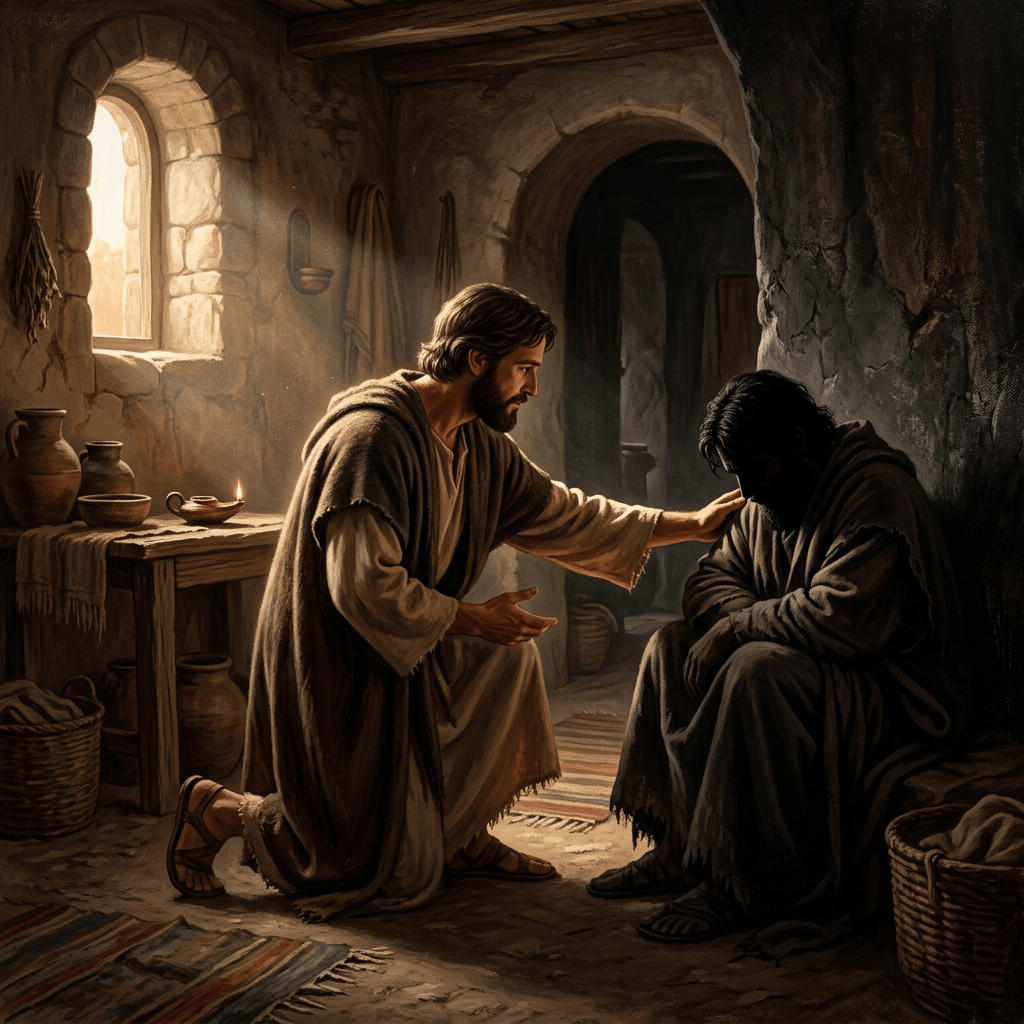
    Ananias obeyed. He went to the house, placed his hands on Saul, and spoke to him as a brother in Christ. Saul’s sight was restored, and he was baptized.

    This was the beginning of a remarkable transformation. The man who had devoted himself to persecuting Christians became one of the greatest messengers of the gospel. His passion was redirected, and his life was devoted to telling others about Jesus.

    Paul would go on to travel, preach, write letters that became part of the New Testament, and influence countless lives for generations to come.

    But before Paul could carry the message of Jesus to the world, Ananias had to be willing to take a step of faith.

    Paul would touch the world, but first, Ananias had to be willing to reach out and touch Paul.

    What would have happened if Ananias had refused to go? God could certainly have accomplished his purposes another way, but Ananias would have missed the opportunity to be part of what God was doing.

    You and I may have a “Paul” in our lives today. We may encounter people whose futures we cannot begin to imagine. They may be difficult to approach, rough around the edges, or struggling through circumstances that make us hesitant to get involved.

    Yet, God may use a simple act of kindness, an opportunity, or a conversation to help change the direction of someone’s life.

    • Befriend the coworker who is a little rough around the edges.
    • Make an effort to talk to the neighbor who seems standoffish.
    • Give someone an opportunity to prove themselves, even when their circumstances make you hesitant.
    • Extend grace to someone who needs a second chance.
    • Allow your faith to make a difference in the life of someone who may one day make a difference in the lives of many others.

    We don’t always know what God is doing in someone else’s life. We can’t see their potential or know how He might use them in the future. But we can choose to be faithful with the opportunities He places before us today.

    The person you encourage today may be the person God uses to encourage thousands tomorrow.

    Don’t underestimate the power of a simple act of obedience. You may never know how far its impact will reach.

    Thanks for reading.

  • Podcast Episode: Finding Peace In Hard Times

    Podcast Episode: Finding Peace In Hard Times

    Pip: Get Encouraged is doing what it says on the label this week — Chris Miller has been quietly writing through the hard parts of November, and the result is a stretch of posts that take suffering, storms, and eternity seriously.

    Mara: We're covering three territories today: finding comfort when life gets painful, holding on to faith when circumstances feel chaotic, and what it looks like to live with a hope that reaches beyond this world.

    Pip: Let's start with the harder end of that list — what to do when pain shows up uninvited and decides to stay.

    Comfort Through Suffering

    Mara: The question running through these posts is straightforward but not easy: when life fills up with anxiety, financial strain, loss, and grief, where do you actually put your weight?

    Pip: "A Month of Blessings" opens with exactly that inventory — October's changes, worries, and financial pressures — and then lands on Psalm 100:4: "Enter his gates with thanksgiving; go into his courts with praise. Give thanks to him and praise his name."

    Mara: Gratitude here isn't a mood. It's a practice — making a specific list of where the Lord showed up, even inside a difficult month, and using that list to walk into the next one differently.

    Pip: "Hold Tightly" extends that same logic into the moments when energy, peace, and money are all running low simultaneously. The anchor verse is Hebrews 10:23: "Let us hold tightly without wavering to the hope we affirm, for God can be trusted to keep his promise."

    Mara: And the post is careful to name specific struggles — anxiety, guilt, financial pressure — and match each one to a specific promise. The point is that the promises don't depend on circumstances stabilizing first.

    Pip: "When Pain is Part of the Story" takes that further. It asks what happens when you lose the thing that made you feel safe — a job, your health, a relationship — and the answer it gives is not a quick resolution.

    Mara: Right. The post points to Jesus on the cross as someone who knew suffering lay ahead and endured it because of what was beyond it. The upshot is that present pain doesn't tell the whole story — God is still working even when you can't see it.

    Pip: Which is a harder sell than a pep talk, and probably more useful.

    Mara: That tension — real struggle, real hope — is what connects all three posts in this group. Speaking of what lies beyond the storm, the next territory is what faith looks like while you're still in the middle of one.

    Faith In The Storm

    Pip: The storm posts start with a scene most readers know — the disciples in a boat, waves crashing, and Jesus asleep in the back — and use it as a frame for whatever is making life feel chaotic right now.

    Mara: "Peace in the Storm" sets it up directly: "Jesus was sleeping at the back of the boat with his head on a cushion. The disciples woke him up, shouting, 'Teacher, don't you care that we're going to drown?'"

    Pip: That question — don't you care? — is the one people actually ask when the storm is real. And the post doesn't skip past it.

    Mara: It doesn't. Jesus answers by stilling the storm, and the post draws on Philippians 4:7 to note that the peace he offers doesn't always mean changed circumstances — sometimes it's the strength to keep going while the storm continues.

    Pip: "Go Back to the Beginning" approaches the same territory from a different angle — not a storm that hits you, but a wrong turn you took. Dead-end road, no way forward, and the only honest move is to retrace your steps back to Jesus.

    Mara: The post grounds that in 1 John 1:9 — confession, forgiveness, a welcome that doesn't require you to have earned another chance. It frames the start of a new month as exactly that kind of fresh start.

    Pip: From storms and wrong turns, the next question is where all of this is actually heading.

    Christlike Witness And Hope

    Mara: This segment holds two different angles on hope — one pointed outward toward how we treat people, and one pointed forward toward what comes after this life entirely.

    Pip: "Only Passing Through" opens with a scene that earns its tissue-box warning: an elderly man in a hospital bed, family gathered, and his last whispered words: "Don't cry. I'll see all of you again. This was never my permanent home. I'm only passing through."

    Mara: That story carries the weight of Hebrews 13:14: "For this world is not our permanent home. We are looking forward to a world yet to come." The post uses it to remind readers that present struggles don't finish the sentence — Revelation 21:4 and Isaiah 35 fill in what's ahead.

    Pip: It's a long view, and it's doing real work — not dismissing today's pain, but refusing to let it be the last word.

    Mara: "Who Shows You Jesus?" brings that same hope into everyday interaction. The question it poses is whether the people around you would put your name on a list of the most Christ-like people they know — and Ephesians 5:1–2 is the standard: "Imitate God…in everything you do, because you are his dear children. Live a life filled with love, following the example of Christ."

    Pip: Eternal destination and daily character — turns out they're the same conversation.


    Mara: Gratitude, endurance, peace in the storm, and a hope that outlasts the hardest chapters — that's the thread running through all of it.

    Pip: Same territory next time, probably. November tends to keep asking these questions. We'll be back when there's more to say.

  • When the Answer is at the Door

    When the Answer is at the Door

    Have you ever spent time looking for something that was right in front of you?

    It is rare that I lose my keys, but it does happen. One morning, I unlocked an office door and left my keys hanging in the lock as I turned to put several items down. I planned to grab my keys next, but then the phone rang. One thing led to another, and my day was underway.

    A few hours later, I realized I couldn’t find my keys. After searching for a while, I mentioned to someone that I had lost them.

    He replied, “No, you didn’t. They’re hanging in your door.”

    Sure enough, there they were, right in plain view. I had been looking for something that was right in front of me.

    Sometimes, we can miss what is right in front of us, even when we are looking for it. The same thing can happen in our spiritual lives. We pray for God to answer, but when the answer comes, we are so surprised that we struggle to believe it.

    Just ask Rhoda and the believers who were praying for Peter.

    They Forgot to Open the Door

    Acts 12 tells the story of Peter being imprisoned because of his faith. While he was in prison, many believers gathered at the home of Mary to pray for him. They were asking God to intervene, and God was already at work. An angel appeared, led Peter out of prison, and brought him to freedom.

    But when Peter arrived at the house where the believers were praying, no one seemed prepared for what happened next.

    Acts 12:13–16 records the scene:

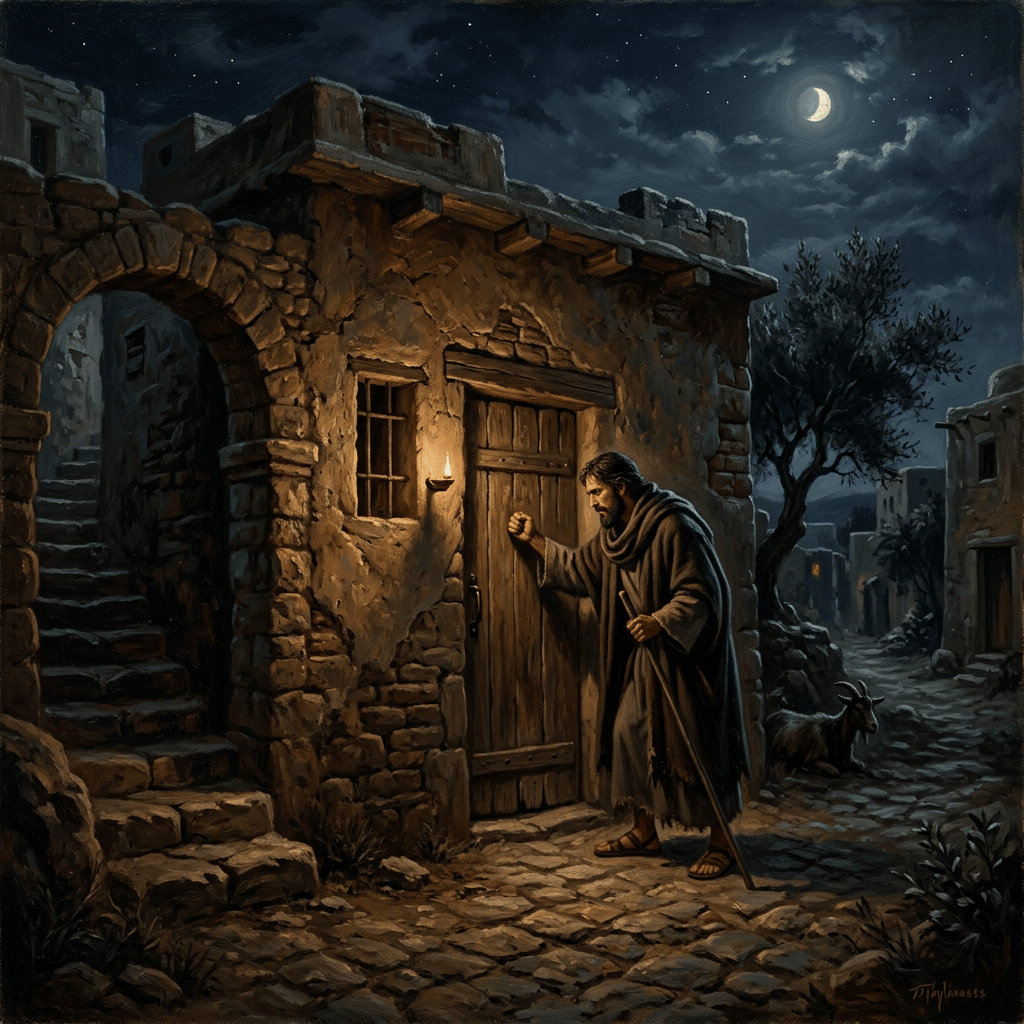
    “Peter knocked at the outer entrance, and a servant named Rhoda came to answer the door. When she recognized Peter’s voice, she was so overjoyed, she ran back without opening it and exclaimed, ‘Peter is at the door!’

    “‘You’re out of your mind,’ they told her. When she kept insisting that it was so, they said it must be his angel. But Peter kept on knocking, and when they opened the door and saw him, they were astonished.”

    Luke paints a remarkable scene. A group of believers has gathered to pray for Peter’s safety, yet when Peter shows up at their door, they struggle to believe the news.

    Rhoda is so excited that she forgets to open the door. Instead, she runs to tell everyone that Peter is outside. The others don’t believe her. Even as they insist she must be mistaken, Peter continues knocking.

    Think about the irony. They are praying for Peter, and God has answered their prayers. Yet when the answer arrives, they cannot believe it.

    The very thing they had been asking God to do was standing outside their door.

    Eventually, someone opens the door, and there stands Peter. Their astonishment reveals just how unexpected this answer was.

    We can smile at the scene, but perhaps there is a lesson here for us, too. Sometimes, we pray with faith that God can answer, yet we are caught off guard when he does. We may become so focused on how we expect him to work that we struggle to recognize his answer when it comes in an unexpected way.

    Be Ready to Open the Door

    God does not always answer our prayers as quickly as he answered the prayers of those believers. Sometimes, we wait much longer than we would like. Sometimes, his answer looks different from what we expected. And sometimes, we may not understand his work until much later.

    But as we pray, we can remain watchful and receptive to the ways God may be working.

    Is there an opportunity you have been praying for that you need to be willing to pursue? Is there a step of faith you have been asking God to help you take? Is he opening a door you never expected, but you have been hesitant to walk through?

    We should never assume that every opportunity is God’s answer to a prayer. We still need wisdom, discernment, and a willingness to follow his word. We also need to be careful not to dismiss what God may be doing simply because his answer doesn’t look the way we imagined.

    The believers in Acts 12 were praying for Peter, but they were astonished when he arrived. May we be people who not only pray expectantly but also remain attentive to how God answers.

    You never know when the answer you have been praying for might be knocking at your door.

    Thanks for reading.