Category: Uncategorized

  • The Person Who Could Change the World

    The Person Who Could Change the World

    He was a man on a mission, and he was confident he was doing the right thing. With paperwork in hand, he was on his way to Damascus to arrest followers of Jesus and bring them back to Jerusalem. His goal was to persecute Christians and put an end to the movement spreading around him.

    Then everything changed.

    A bright light from heaven suddenly flashed around him, and he fell to the ground. A voice interrupted his plans and confronted him with a question he never expected to hear. The confident leader was now trembling before the Lord.

    Acts 9 tells us that this man, Saul, was blinded by the encounter and had to be led by the hand into Damascus. There, he waited and prayed, unable to see what would happen next.

    Meanwhile, God was preparing someone else for an important assignment.

    “In Damascus there was a disciple named Ananias. The Lord called to him in a vision, ‘Ananias!’ ‘Yes, Lord,’ he answered. The Lord told him, ‘Go to the house of Judas on Straight Street and ask for a man from Tarsus named Saul, for he is praying’” (Acts 9:10–11).

    God then explained that Saul had seen a vision of a man named Ananias coming to place his hands on him and restore his sight.

    I wonder what went through Ananias’s mind at that moment.

    “Wait a minute, Lord. You want me to go to Saul? This is the man who has been persecuting Christians. He has caused so much suffering for people who follow You. And You want me to walk right up to him?”

    We can hardly blame Ananias for having those thoughts. Saul had a terrible track record. He had approved of Stephen’s execution, dragged believers from their homes, and sent Christians to prison. Approaching him would have required tremendous faith and courage.

    But God had a plan for Saul’s life, and Ananias was about to play an important part in it.

    The Lord reassured Ananias:

    “But the Lord said to Ananias, ‘Go! This man is my chosen instrument to proclaim my name to the Gentiles and their kings and to the people of Israel’” (Acts 9:15).

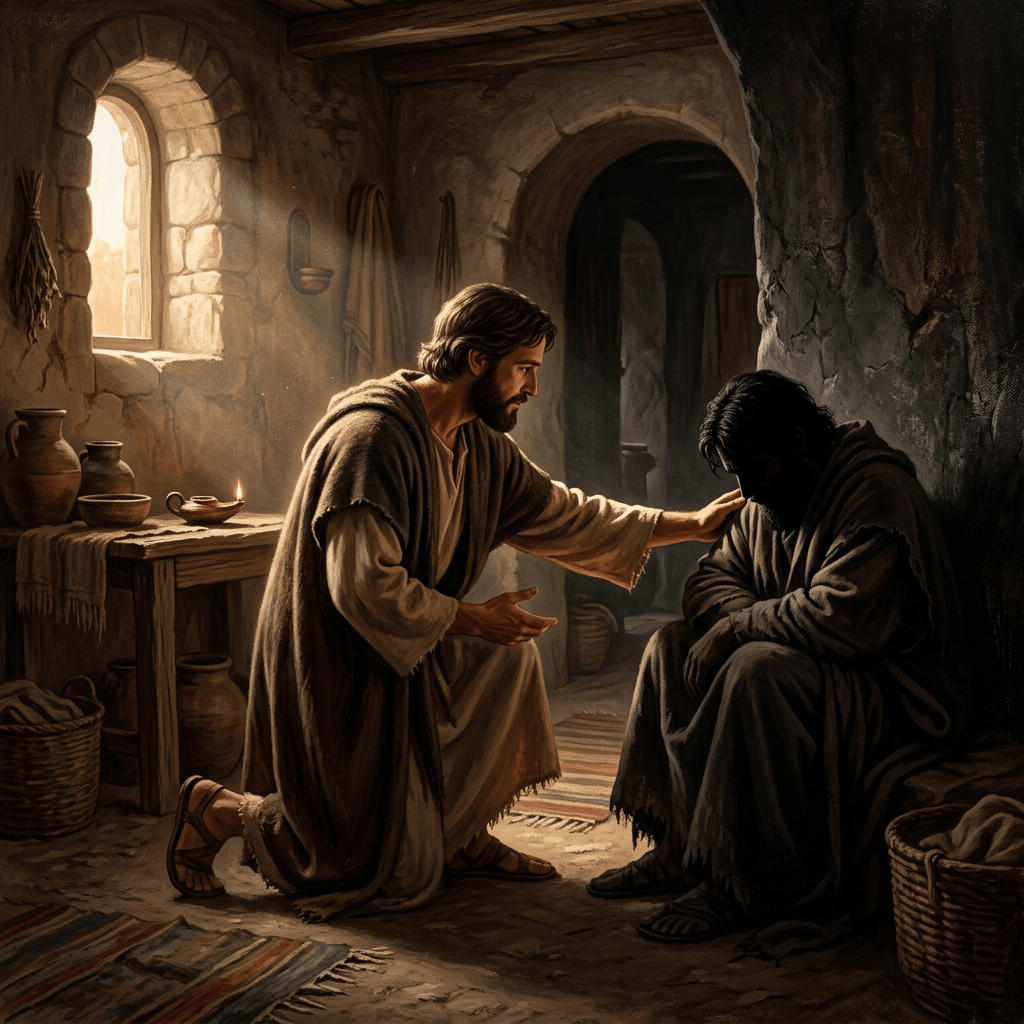
    Ananias obeyed. He went to the house, placed his hands on Saul, and spoke to him as a brother in Christ. Saul’s sight was restored, and he was baptized.

    This was the beginning of a remarkable transformation. The man who had devoted himself to persecuting Christians became one of the greatest messengers of the gospel. His passion was redirected, and his life was devoted to telling others about Jesus.

    Paul would go on to travel, preach, write letters that became part of the New Testament, and influence countless lives for generations to come.

    But before Paul could carry the message of Jesus to the world, Ananias had to be willing to take a step of faith.

    Paul would touch the world, but first, Ananias had to be willing to reach out and touch Paul.

    What would have happened if Ananias had refused to go? God could certainly have accomplished his purposes another way, but Ananias would have missed the opportunity to be part of what God was doing.

    You and I may have a “Paul” in our lives today. We may encounter people whose futures we cannot begin to imagine. They may be difficult to approach, rough around the edges, or struggling through circumstances that make us hesitant to get involved.

    Yet, God may use a simple act of kindness, an opportunity, or a conversation to help change the direction of someone’s life.

    • Befriend the coworker who is a little rough around the edges.
    • Make an effort to talk to the neighbor who seems standoffish.
    • Give someone an opportunity to prove themselves, even when their circumstances make you hesitant.
    • Extend grace to someone who needs a second chance.
    • Allow your faith to make a difference in the life of someone who may one day make a difference in the lives of many others.

    We don’t always know what God is doing in someone else’s life. We can’t see their potential or know how He might use them in the future. But we can choose to be faithful with the opportunities He places before us today.

    The person you encourage today may be the person God uses to encourage thousands tomorrow.

    Don’t underestimate the power of a simple act of obedience. You may never know how far its impact will reach.

    Thanks for reading.

  • Podcast Episode: Finding Peace In Hard Times

    Podcast Episode: Finding Peace In Hard Times

    Pip: Get Encouraged is doing what it says on the label this week — Chris Miller has been quietly writing through the hard parts of November, and the result is a stretch of posts that take suffering, storms, and eternity seriously.

    Mara: We're covering three territories today: finding comfort when life gets painful, holding on to faith when circumstances feel chaotic, and what it looks like to live with a hope that reaches beyond this world.

    Pip: Let's start with the harder end of that list — what to do when pain shows up uninvited and decides to stay.

    Comfort Through Suffering

    Mara: The question running through these posts is straightforward but not easy: when life fills up with anxiety, financial strain, loss, and grief, where do you actually put your weight?

    Pip: "A Month of Blessings" opens with exactly that inventory — October's changes, worries, and financial pressures — and then lands on Psalm 100:4: "Enter his gates with thanksgiving; go into his courts with praise. Give thanks to him and praise his name."

    Mara: Gratitude here isn't a mood. It's a practice — making a specific list of where the Lord showed up, even inside a difficult month, and using that list to walk into the next one differently.

    Pip: "Hold Tightly" extends that same logic into the moments when energy, peace, and money are all running low simultaneously. The anchor verse is Hebrews 10:23: "Let us hold tightly without wavering to the hope we affirm, for God can be trusted to keep his promise."

    Mara: And the post is careful to name specific struggles — anxiety, guilt, financial pressure — and match each one to a specific promise. The point is that the promises don't depend on circumstances stabilizing first.

    Pip: "When Pain is Part of the Story" takes that further. It asks what happens when you lose the thing that made you feel safe — a job, your health, a relationship — and the answer it gives is not a quick resolution.

    Mara: Right. The post points to Jesus on the cross as someone who knew suffering lay ahead and endured it because of what was beyond it. The upshot is that present pain doesn't tell the whole story — God is still working even when you can't see it.

    Pip: Which is a harder sell than a pep talk, and probably more useful.

    Mara: That tension — real struggle, real hope — is what connects all three posts in this group. Speaking of what lies beyond the storm, the next territory is what faith looks like while you're still in the middle of one.

    Faith In The Storm

    Pip: The storm posts start with a scene most readers know — the disciples in a boat, waves crashing, and Jesus asleep in the back — and use it as a frame for whatever is making life feel chaotic right now.

    Mara: "Peace in the Storm" sets it up directly: "Jesus was sleeping at the back of the boat with his head on a cushion. The disciples woke him up, shouting, 'Teacher, don't you care that we're going to drown?'"

    Pip: That question — don't you care? — is the one people actually ask when the storm is real. And the post doesn't skip past it.

    Mara: It doesn't. Jesus answers by stilling the storm, and the post draws on Philippians 4:7 to note that the peace he offers doesn't always mean changed circumstances — sometimes it's the strength to keep going while the storm continues.

    Pip: "Go Back to the Beginning" approaches the same territory from a different angle — not a storm that hits you, but a wrong turn you took. Dead-end road, no way forward, and the only honest move is to retrace your steps back to Jesus.

    Mara: The post grounds that in 1 John 1:9 — confession, forgiveness, a welcome that doesn't require you to have earned another chance. It frames the start of a new month as exactly that kind of fresh start.

    Pip: From storms and wrong turns, the next question is where all of this is actually heading.

    Christlike Witness And Hope

    Mara: This segment holds two different angles on hope — one pointed outward toward how we treat people, and one pointed forward toward what comes after this life entirely.

    Pip: "Only Passing Through" opens with a scene that earns its tissue-box warning: an elderly man in a hospital bed, family gathered, and his last whispered words: "Don't cry. I'll see all of you again. This was never my permanent home. I'm only passing through."

    Mara: That story carries the weight of Hebrews 13:14: "For this world is not our permanent home. We are looking forward to a world yet to come." The post uses it to remind readers that present struggles don't finish the sentence — Revelation 21:4 and Isaiah 35 fill in what's ahead.

    Pip: It's a long view, and it's doing real work — not dismissing today's pain, but refusing to let it be the last word.

    Mara: "Who Shows You Jesus?" brings that same hope into everyday interaction. The question it poses is whether the people around you would put your name on a list of the most Christ-like people they know — and Ephesians 5:1–2 is the standard: "Imitate God…in everything you do, because you are his dear children. Live a life filled with love, following the example of Christ."

    Pip: Eternal destination and daily character — turns out they're the same conversation.


    Mara: Gratitude, endurance, peace in the storm, and a hope that outlasts the hardest chapters — that's the thread running through all of it.

    Pip: Same territory next time, probably. November tends to keep asking these questions. We'll be back when there's more to say.

  • When the Answer is at the Door

    When the Answer is at the Door

    Have you ever spent time looking for something that was right in front of you?

    It is rare that I lose my keys, but it does happen. One morning, I unlocked an office door and left my keys hanging in the lock as I turned to put several items down. I planned to grab my keys next, but then the phone rang. One thing led to another, and my day was underway.

    A few hours later, I realized I couldn’t find my keys. After searching for a while, I mentioned to someone that I had lost them.

    He replied, “No, you didn’t. They’re hanging in your door.”

    Sure enough, there they were, right in plain view. I had been looking for something that was right in front of me.

    Sometimes, we can miss what is right in front of us, even when we are looking for it. The same thing can happen in our spiritual lives. We pray for God to answer, but when the answer comes, we are so surprised that we struggle to believe it.

    Just ask Rhoda and the believers who were praying for Peter.

    They Forgot to Open the Door

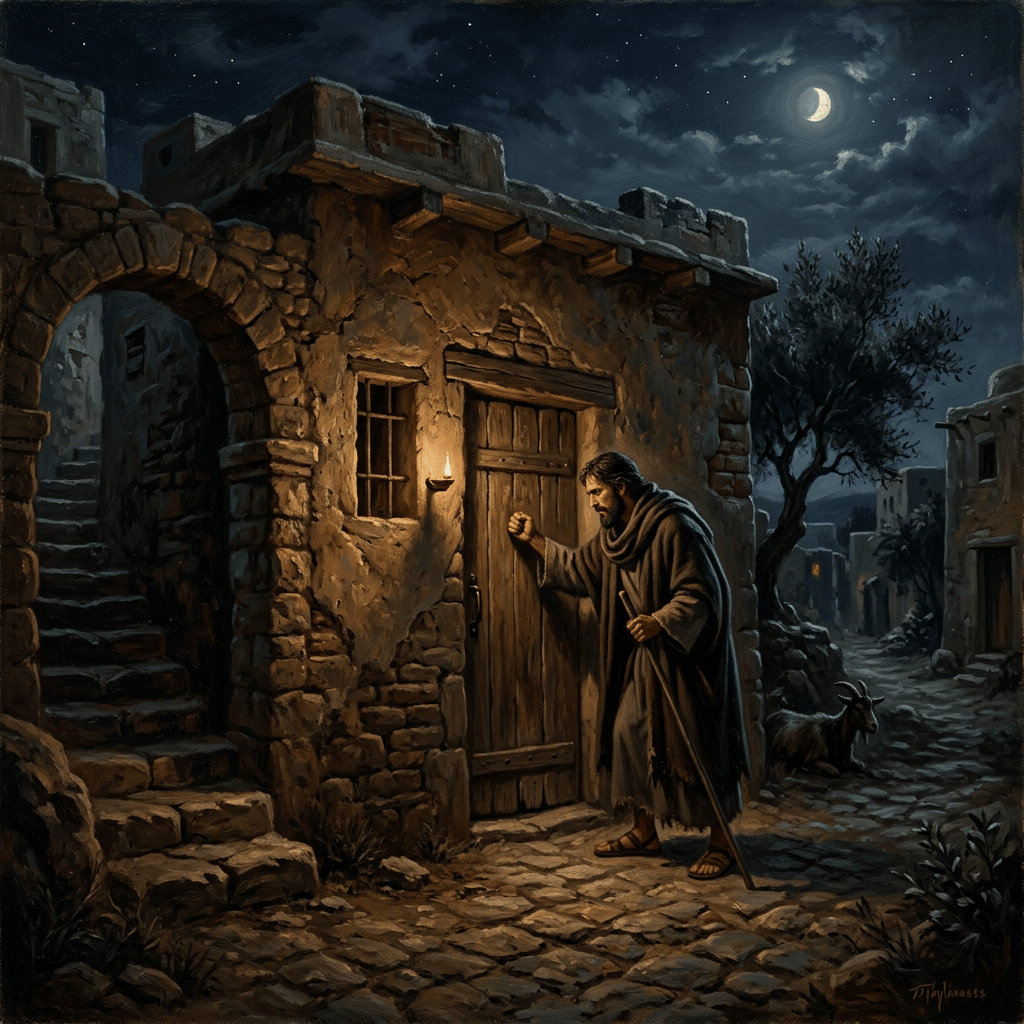
    Acts 12 tells the story of Peter being imprisoned because of his faith. While he was in prison, many believers gathered at the home of Mary to pray for him. They were asking God to intervene, and God was already at work. An angel appeared, led Peter out of prison, and brought him to freedom.

    But when Peter arrived at the house where the believers were praying, no one seemed prepared for what happened next.

    Acts 12:13–16 records the scene:

    “Peter knocked at the outer entrance, and a servant named Rhoda came to answer the door. When she recognized Peter’s voice, she was so overjoyed, she ran back without opening it and exclaimed, ‘Peter is at the door!’

    “‘You’re out of your mind,’ they told her. When she kept insisting that it was so, they said it must be his angel. But Peter kept on knocking, and when they opened the door and saw him, they were astonished.”

    Luke paints a remarkable scene. A group of believers has gathered to pray for Peter’s safety, yet when Peter shows up at their door, they struggle to believe the news.

    Rhoda is so excited that she forgets to open the door. Instead, she runs to tell everyone that Peter is outside. The others don’t believe her. Even as they insist she must be mistaken, Peter continues knocking.

    Think about the irony. They are praying for Peter, and God has answered their prayers. Yet when the answer arrives, they cannot believe it.

    The very thing they had been asking God to do was standing outside their door.

    Eventually, someone opens the door, and there stands Peter. Their astonishment reveals just how unexpected this answer was.

    We can smile at the scene, but perhaps there is a lesson here for us, too. Sometimes, we pray with faith that God can answer, yet we are caught off guard when he does. We may become so focused on how we expect him to work that we struggle to recognize his answer when it comes in an unexpected way.

    Be Ready to Open the Door

    God does not always answer our prayers as quickly as he answered the prayers of those believers. Sometimes, we wait much longer than we would like. Sometimes, his answer looks different from what we expected. And sometimes, we may not understand his work until much later.

    But as we pray, we can remain watchful and receptive to the ways God may be working.

    Is there an opportunity you have been praying for that you need to be willing to pursue? Is there a step of faith you have been asking God to help you take? Is he opening a door you never expected, but you have been hesitant to walk through?

    We should never assume that every opportunity is God’s answer to a prayer. We still need wisdom, discernment, and a willingness to follow his word. We also need to be careful not to dismiss what God may be doing simply because his answer doesn’t look the way we imagined.

    The believers in Acts 12 were praying for Peter, but they were astonished when he arrived. May we be people who not only pray expectantly but also remain attentive to how God answers.

    You never know when the answer you have been praying for might be knocking at your door.

    Thanks for reading.

  • Only Passing Through

    Only Passing Through

    A quick word of caution: You may want to keep a tissue nearby.

    An elderly man lay in a hospital bed, his strength quickly fading. Realizing the end was near, the doctors and nurses contacted his family.

    Soon, his room was filled with the people he loved most. He held the hand of his wife of 50 years as he looked at his son and grandchildren. Then, with the little strength he had left, he whispered, “Don’t cry. I’ll see all of you again. This was never my permanent home. I’m only passing through.”

    A moment later, he looked up and said, “I can see the Lord’s face.”

    Peacefully, he closed his eyes and went to be with the Lord.

    What a beautiful reminder of the hope we have in Christ!

    “For this world is not our permanent home. We are looking forward to a world yet to come” (Hebrews 13:14).

    The writer of Hebrews wanted his readers to remember that this world was not their final destination. They were facing difficult circumstances, and they needed encouragement to keep going. Their struggles were real, but those struggles did not tell the whole story. God was still with them, and a better day was coming.

    We need that same reminder today.

    Life can be difficult. We face disappointments, deal with heartache, and experience struggles we never expected. Sometimes, the challenges of today can make it difficult to see beyond the moment we are in, but as followers of Christ, we have a hope that reaches beyond our present circumstances. This world is not our permanent home.

    The pain we experience here will not last forever. One day, the struggles of this life will give way to something far better. We are looking forward to Heaven!

    Although we cannot fully comprehend all that awaits us, Scripture gives us glimpses of the glorious future God has prepared. Revelation 21:4 promises that God will wipe away every tear and that there will be no more death, sorrow, crying, or pain. Isaiah 35:5–6 paints a picture of healing and restoration, where the blind will see and the deaf will hear.

    Think about that for a moment. No more heartache. No more suffering. No more saying goodbye to the people we love. The struggles that weigh us down today will not follow us into eternity.

    Heaven will be glorious!

    Are you struggling today? Take heart. Your current circumstances are not the end of your story. Whatever you are facing, remember that this world is only temporary. Through Jesus, we have the promise of an eternal home where we will be with the Lord forever.

    We are only passing through. Our permanent home is still ahead, and what awaits us is far greater than anything this world can offer.

    Dwell on that promise today, and let it encourage you to keep going.

    Thanks for reading.

  • When Pain is Part of the Story

    When Pain is Part of the Story

    Have you ever lost something that made you feel safe?

    Maybe it was a job you loved, good health you took for granted, a relationship you thought would last, or the stability of knowing what tomorrow would bring. One day, life feels predictable. The next, everything changes. What once brought you comfort is suddenly a source of pain, and you find yourself wondering how you will move forward.

    Pain has a way of changing our lives. We desperately want to hold on to what we know, but sometimes, circumstances are beyond our control. We cannot stop the changes, undo the hurt, or see what lies ahead.

    So, what do we do when pain becomes part of our story?

    We can hold tightly to Jesus. He understands. Jesus knew what it was like to be rejected, hated, and physically wounded. He experienced the anguish of suffering and the heartbreak of betrayal. When we hurt, we can turn to him for help and discover how to face our pain with hope.

    Look beyond today’s pain.

    Jesus walked a path that led to a Roman cross. He knew suffering lay ahead. He knew the cross would bring unimaginable agony, yet he also knew the cross would not be the end of the story.

    Beyond the suffering was the resurrection. Beyond the cross was victory over sin and death. Jesus endured the pain because of what his sacrifice would accomplish.

    We may not understand why we are experiencing pain, and we cannot always see what tomorrow will bring. However, we can remember that our present circumstances do not tell the whole story. God is still at work, even when we cannot see what he is doing.

    The Bible does not promise that every difficult situation will be resolved by tomorrow. It does, however, point us toward a hope that reaches beyond our present struggles. For those who belong to Christ, pain and suffering will not have the final word.

    When today hurts, lift your eyes beyond what you are experiencing right now. There is hope beyond the pain, and God will remain faithful through every step of the journey.

    Rely on the Lord.

    When pain shakes the things, we once depended on, we need someone who will never let us down. Scripture reminds us that we can depend on the Lord.

    The psalmist declares:

    “The Lord is for me, so I will have no fear. What can mere people do to me?” (Psalm 118:6).

    Hebrews 13:6 echoes that same confidence:

    “So we can say with confidence, ‘The Lord is my helper, so I will have no fear. What can mere people do to me?’”

    Notice the source of this confidence. It is not a promise that we will never experience pain, loss, or disappointment. It is the assurance that we do not have to face them alone.

    When your world feels uncertain, the Lord remains faithful. When you do not know what to do next, you can ask him for wisdom and strength. When the pain feels overwhelming, you can bring your hurt to him in prayer.

    You may not be able to change what happened yesterday or control what happens tomorrow, but you can rely on the Lord today.

    Pain may have changed your circumstances, but it does not have to destroy your hope. Look beyond today’s struggles, lean on the one who understands your pain, and remember that your story is not finished.

    Thanks for reading.

  • Who shows you Jesus?

    Who shows you Jesus?

    Who is the most Christ-like person you know?

    Most likely, someone comes to mind. Their life reflects grace and love, and when you spend time with them, you see a glimpse of Jesus in the way they treat others.

    I was recently asked this question, but there was a follow-up that made me stop and think: How many people would put you at the top of their list?

    That’s a challenging question. When others think of me, do they think of someone whose character reflects grace and love? Does the way I treat people remind them of Jesus?

    The Bible encourages us to be imitators of Christ.

    “Imitate God…in everything you do, because you are his dear children. Live a life filled with love, following the example of Christ” (Ephesians 5:1–2).

    Being Christ-like isn’t about being perfect. It’s about allowing Jesus to shape our character, influence our decisions, and guide the way we treat others. It shows up in our patience, kindness, forgiveness, and love.

    You may never know how much your actions influence someone else’s view of Jesus. A kind word, a gracious response, or a willingness to forgive may be exactly what someone needs to see.

    So, let me ask you the same question I was asked: If someone were making a list of the most Christ-like people they know, would your name be near the top?

    Don’t let this question discourage you. Let it challenge you. Today is another opportunity to reflect the love of Jesus in the way you live and interact with others.

    Make it your goal to live in such a way that when people see you, they catch a glimpse of Jesus.

    Thanks for reading.

  • Peace in the Storm

    Peace in the Storm

    Have you ever faced a storm that made you wonder if you were going to make it?

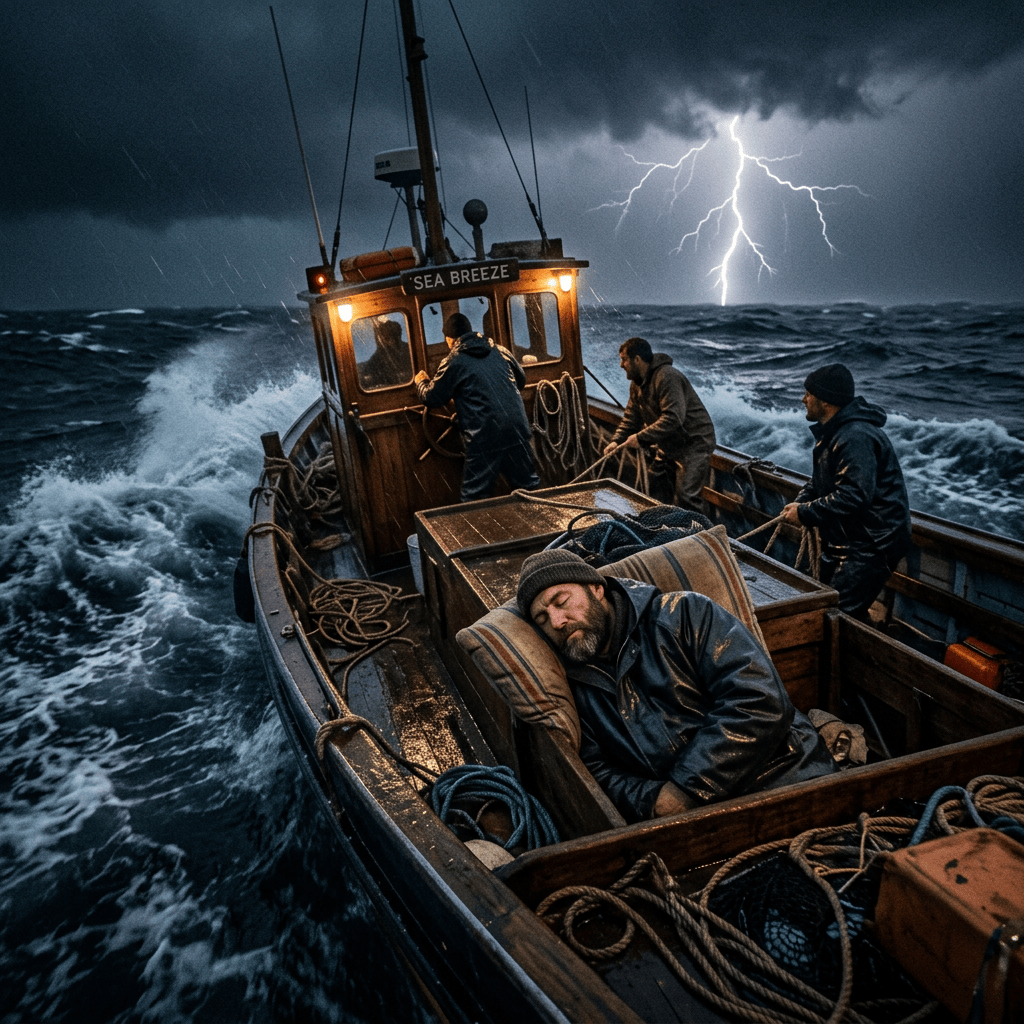
    The disciples knew that feeling. They were in the middle of the sea when a fierce storm suddenly developed. Waves crashed into the boat, and water began filling it. Several of these men were experienced fishermen, but perhaps even they had never faced a storm quite this frightening.

    The storm was all around them, and they were afraid they wouldn’t survive.

    “Jesus was sleeping at the back of the boat with his head on a cushion. The disciples woke him up, shouting, ‘Teacher, don’t you care that we’re going to drown?’” (Mark 4:38).

    Put yourself in that boat for a moment.

    You’re sailing through life when a fierce storm suddenly develops. It may be uncertainty caused by the latest headlines, mounting financial pressures, a frightening health crisis, or the end of a relationship. Whatever the cause, life suddenly feels chaotic, and you begin wondering how you are going to make it.

    Like the disciples, you cry out to Jesus for help, and Jesus answers.

    “When Jesus woke up, he rebuked the wind and said to the waves, ‘Silence! Be still!’ Suddenly the wind stopped, and there was a great calm” (Mark 4:39).

    In a moment, everything changed. The wind stopped. The waves settled. The storm that had terrified the disciples was silenced by Jesus.

    The same Jesus is with us when life’s storms threaten to overwhelm us.

    Philippians 4:7 reminds us that God can give us a peace that surpasses all understanding. It’s a peace that doesn’t depend on having everything figured out, or knowing how our circumstances will turn out. Sometimes, Jesus changes our circumstances. Other times, he gives us the strength and peace to keep going while the storm continues.

    The storm may be raging around you today, but you don’t have to face it alone. Jesus is with you. Hold tightly to his promises, bring your fears to him, and take the next step in faith.

    You may not know how the storm will end, but you can trust the one who is with you in the boat.

  • Hold Tightly

    Hold Tightly

    Are you struggling to get through today?

    Maybe you’re running low on energy, battling anxiety, wrestling with guilt, or wondering how you’re going to make ends meet. Life can feel overwhelming, and sometimes, the challenges of today leave us wondering where to turn for help.

    When that happens, we can find encouragement in Scripture.

    “Let us hold tightly without wavering to the hope we affirm, for God can be trusted to keep his promise” (Hebrews 10:23).

    When life gets difficult, hold tightly to the promises of God. Our circumstances may change, our feelings may fluctuate, and our strength may run low, but we can trust the Lord’s promises.

    If you’re struggling to find the strength to push through today, hold tightly to God’s promise that those who trust in him will find renewed strength (Isaiah 40:31).

    If anxiety is weighing you down, hold tightly to the reminder that you can cast your cares on the Lord because He cares for you (1 Peter 5:7).

    If guilt is keeping you from moving forward, hold tightly to God’s promise that when we confess our sins, he is faithful and just to forgive us (1 John 1:9).

    If financial pressures are keeping you awake at night, hold tightly to Jesus’ words in Matthew 6:33. Seek God and his kingdom first, and he will care for your needs.

    Your struggles are real. You don’t have to pretend they aren’t, but neither do you have to face them without hope.

    Whatever today brings, hold tightly to the hope you have in him. You may not know how everything will work out, but you can trust the Lord’s promises.

    God is faithful, so that gives you a reason to keep going today.

  • Go Back to the Beginning

    Go Back to the Beginning

    Have you ever made a wrong turn and found yourself on a dead-end road?

    Your trip is going well. You make a turn that seems right, but suddenly, the road ends. You can’t turn left, right, or go forward. The best move you can make is go back to the beginning.

    Our spiritual lives work in the same way. You may think life is going well, but suddenly, you realize you’ve made a wrong turn. The road ends, and the best thing you can do is go back to the beginning.

    At the beginning, we find Jesus. John 1:1 reminds us Jesus has been there since the start. We may try thousands of paths to avoid retracing our steps, but when all is finished, the best move is to go back to Jesus.

    You see, 1 John 1:9 says if we confess our sins, the Lord is faithful and just to forgive us. Jesus will welcome us. He won’t only welcome us; he will run to meet us. You don’t have to keep traveling down a road that leads you away from God. You can turn around and come back to Jesus.

    As we begin a new month, perhaps this is the fresh start you need. You don’t have to wait until January, your circumstances improve, or you feel you’ve earned another chance. You can begin today.

    If you’ve reached a dead end, turn back to Jesus.

    • His grace is sufficient.
    • His forgiveness is available.
    • His arms are open.

    Sometimes, the best way forward is to go back to the beginning.

  • Podcast Episode: Finding Courage In Change

    Podcast Episode: Finding Courage In Change

    Pip: Get Encouraged is back, and this week the posts are asking the questions you probably forgot to ask yourself today — did you notice anything, did you show up, and are you carrying something you were never meant to hold?

    Mara: Chris Miller covers that territory across three areas: finding God in ordinary moments, finding courage when the day goes sideways, and finding the nerve to step into what's next. Let's start with what it actually means to look for God in the everyday.

    Faith In Everyday Moments

    Mara: The central question here is attention — not whether God is present, but whether we're paying enough notice to catch it. Busy days have a way of absorbing the very moments that might otherwise feel like grace.

    Pip: "Did You See God Today?" puts it directly: "Our lives are busy, and some days, we can become so distracted that we fail to see the Lord. The beauty of a sunrise is absorbed by worry about the upcoming day."

    Mara: So the upshot is that distraction isn't just a productivity problem — it's a spiritual one. The post reframes the question itself: instead of "did you see God today," ask "where did you see God today?" The shift from yes-or-no to active searching changes how you move through a day.

    Pip: That reframe is doing real work. It assumes presence rather than asking you to prove it.

    Mara: "A Month of Blessings" extends that same logic across a longer arc — an entire month rather than a single day. It asks readers to inventory October specifically: the challenges, the financial strain, the moments of rest, and where the Lord showed up through all of it.

    Pip: Gratitude as a closing ritual, basically. End the month by listing what held.

    Mara: The post anchors that in Psalm 100:4 — "Enter his gates with thanksgiving; go into his courts with praise. Give thanks to him and praise his name" — and frames the exercise as a way to walk into November with momentum rather than just relief that October is over.

    Pip: Noticing daily, accounting monthly. The scale changes; the posture doesn't. Speaking of posture — how do you hold up when the day itself falls apart?

    Courage Through Disruption

    Pip: This segment is about what happens when the plan breaks — and whether an interruption is a problem to manage or something else entirely.

    Mara: "The Day was Disrupted" goes straight to a scene in Luke 8. Jesus is on his way to help Jairus when a woman in the crowd reaches out and touches his robe. The post quotes Luke directly: "Daughter," he said to her, "your faith has made you well. Go in peace."

    Pip: And the point isn't the miracle — it's the posture. Jesus doesn't register the interruption as a cost. He treats it as the thing that was actually supposed to happen.

    Mara: Exactly. The post asks what it would look like to respond that way — to see an unplanned moment as an opportunity rather than an inconvenience, because someone in that moment might genuinely need it.

    Pip: "The Courage to Show Up Again" takes the disruption inward — what happens when the day that fell apart was yesterday, and now you have to face today anyway.

    Mara: It leans on Galatians 6:9: "So let's not get tired of doing what is good. At just the right time we will reap a harvest of blessing if we don't give up." The post is honest that showing up again might just mean getting out of bed.

    Pip: Small threshold, real courage.

    Mara: "Put Down the Block" adds the third angle — the weight you're carrying into the disrupted day in the first place. Past mistakes, old grudges, unresolved guilt. The post uses the image of running a race while hauling a concrete block, and the argument is simple: you weren't built to carry that permanently.

    Pip: Disruptions are hard enough without the extra freight. Which raises the question of what you're running toward — and whether fear is deciding that for you.

    Embracing New Opportunities

    Mara: "Keep Shining" opens with a farmer and his wife who planted a church two hundred years ago — no headlines, no recognition — and that church is still active today. Jesus puts it plainly in Luke 16:10: "If you are faithful in little things, you will be faithful in large ones."

    Pip: Faithfulness as compound interest. The lighthouse in the post makes the same case — it doesn't guide ships with one spectacular flash; it just keeps the light on.

    Mara: "A Different Kind of Awesome" is the companion to that — it asks what happens when the opportunity in front of you is genuinely new and genuinely frightening. The promotion, the commitment, the change you keep postponing. The post doesn't dismiss the fear, but it does ask whether fear should be the one making the decision.

    Pip: Sometimes the wilderness is just the view from before you took the step.


    Mara: Notice more, carry less, keep showing up — that's the thread running through all of it.

    Pip: Same territory next time, probably. The ordinary days keep coming. See you there.